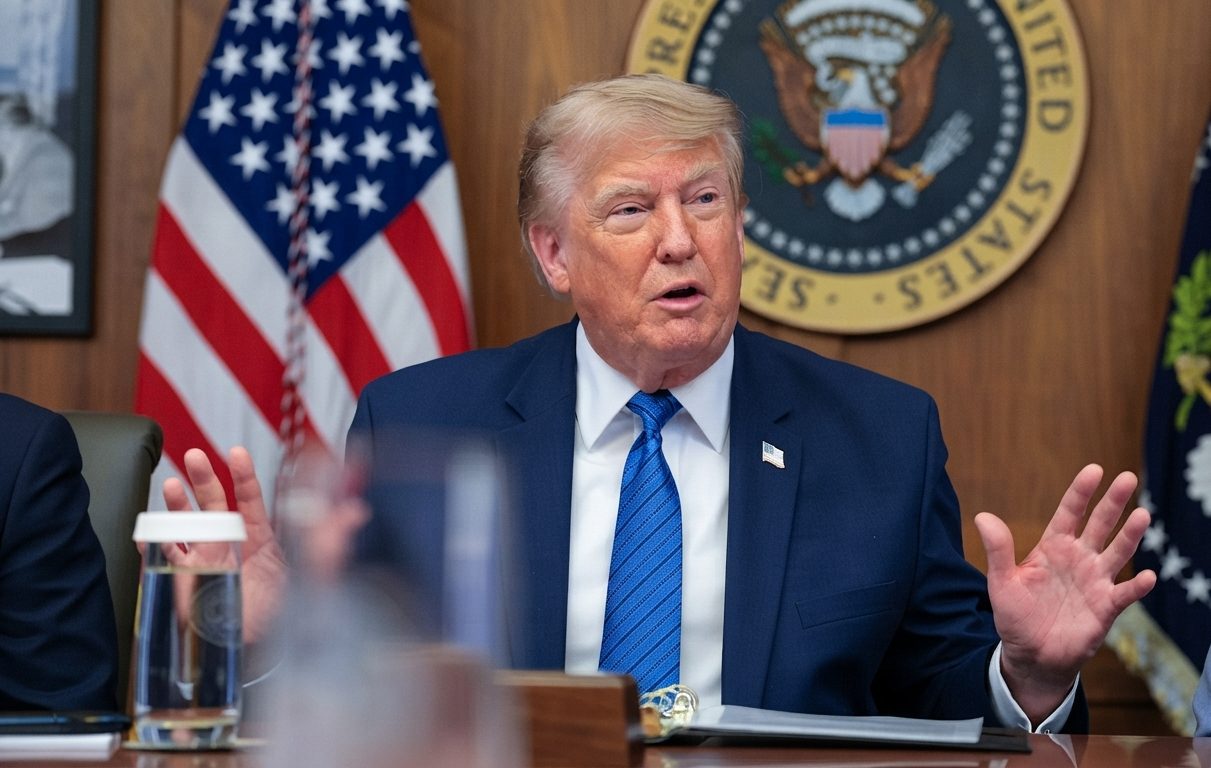
American energy policy witnessed an unexpected political shift this week as President Donald Trump publicly criticized two of the country’s largest petroleum producers for generating excessive earnings during a period of international market turbulence. Speaking from the White House, the commander in chief argued that major oil companies were profiting heavily from supply shortages and urged corporate leaders to return a portion of their financial gains to ordinary citizens while bringing down retail fuel costs at local stations.
The pointed remarks followed a flurry of corporate financial disclosures revealing that ExxonMobil and Chevron secured a combined twenty-nine billion dollars in net income during the second quarter. The massive earnings windfall translated to an average of three hundred eighteen million dollars per day, more than triple the figures recorded during the corresponding period last year. This sharp financial upturn was driven largely by elevated crude oil prices and expanding refining margins resulting from ongoing geopolitical tensions and security concerns around the strategic Strait of Hormuz.
Addressing reporters gathered at the executive mansion, the president expressed clear displeasure with the current economic reality facing everyday motorists who continue to absorb high fuel costs at the pump. While positioning himself as a steadfast supporter of free market enterprise and commercial independence, he drew a firm line regarding the scale of corporate accumulation during a national security crisis. He emphasized that the energy giants should proactively alleviate the financial pressure resting on consumers rather than banking unprecedented sums while regional conflicts restrict global supply chains.
The presidential rebuke was not restricted to economic performance alone, as the administration also targeted executive leadership over public commentary regarding industry success. Earlier in the day, the White House chief executive took to social media to criticize Chevron Chairman and Chief Executive Mike Wirth following a television interview where the corporate head discussed market conditions. The administration asserted that industry leaders failed to properly acknowledge government actions and regulatory support that enabled domestic petroleum entities to reenter lucrative international markets such as Venezuela and expand operational capacity.
Energy sector representatives quickly pushed back against the mounting political pressure, pointing out that retail pricing is fundamentally tied to international supply and demand dynamics rather than corporate orchestration. Industry trade groups explained that ongoing uncertainties across critical global shipping lanes and tightening commercial inventories dictate market realities that individual producers cannot unilaterally control. Furthermore, corporate representatives noted that much of the recent capital has been directed toward strengthening balance sheets and retiring outstanding debt rather than rewarding equity holders through aggressive share buybacks.
Average retail prices for regular gasoline across the United States have hovered around four dollars and ten cents per gallon, marking a significant increase compared to figures recorded before military engagements involving Iran escalated earlier in the year. Although recent developments have introduced minor shifts in global crude benchmarks, retail pumps typically reflect broader market adjustments at a much slower pace. Analysts observing the energy landscape indicate that structural supply constraints and depleted strategic reserves leave limited room for rapid price relief unless maritime trade routes fully normalize.
Boardroom Voices Africa Insight
The unfolding standoff between the White House and top-tier American oil conglomerates highlights the delicate balancing act governments face when managing energy security during times of geopolitical crisis. For emerging energy markets across Africa, this high-stakes friction serves as an important lesson in stakeholder capitalism and the political hazards of record profitability during widespread economic hardship. As African nations continue to develop their own petroleum and gas sectors, policymakers and corporate boards must navigate the fine line between maximizing shareholder value through favorable commodity cycles and maintaining social license by protecting vulnerable consumers from inflationary shocks. Long-term industry stability relies heavily on proactive corporate statesmanship that anticipates public sentiment before regulatory interventions or public reprimands materialize.