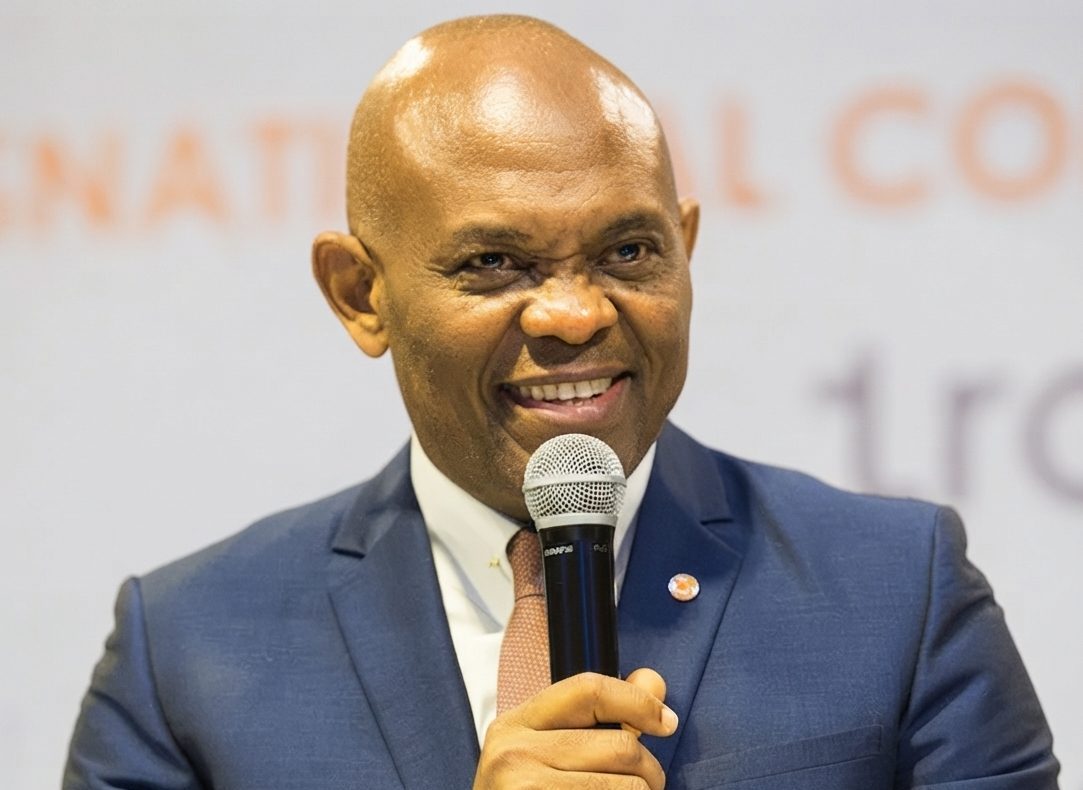
During the recent Delta State Economic and Investment Summit held in Asaba, the Chairman of Heirs Holdings and founder of Transcorp Group, Tony Elumelu, stepped forward to endorse his home state as a premier destination for local and international capital. Addressing a gathering of policymakers, development partners, and industry titans, the prominent billionaire investor emphasized that the subnational entity is fully open for profitable business ventures while laying bare the fundamental catalyst required to sustain its rapid industrialization.
Elumelu noted that his perspective on the region is shaped not only by executive briefings but also by a close personal observation of its changing topography. As an indigene who frequently monitors development across various media channels, he expressed profound admiration for the ongoing physical and structural transformation. From housing estates springing up across different localities to expanding commercial footprints, the visible momentum has reinforced investor confidence. He praised the visionary leadership of Governor Sheriff Oborevwori for steering the administration toward a path of sustainable growth and creating an environment where enterprise can thrive without unnecessary friction.
However, the conversation quickly pivoted from general accolades to the critical operational realities facing industrial expansion. While capital is fluid and naturally gravitates toward secure and welcoming territories, physical infrastructure determines whether investments endure. Drawing from his vast experience spanning financial services and the energy sector, Elumelu stressed that reliable electricity remains the bedrock of any serious economic transformation. Without a steady and affordable power supply, manufacturing plants, small-scale enterprises, and logistics hubs struggle to achieve optimal productivity.
Delving deeper into the regional energy capacity, the Heirs Holdings chairman revealed a striking paradox within the local power ecosystem. The state currently boasts approximately 1000 megawatts of installed electricity generation capacity. This substantial figure holds the promise of driving heavy industrialization and meeting domestic energy demands across communities. Yet a significant portion of this infrastructure remains severely underutilized. The bottleneck, according to industry evaluations, stems primarily from persistent gas supply constraints that restrict power plants from operating at maximum efficiency.
To bridge this operational gap, Elumelu formally proposed a strategic partnership between his corporate group and the Delta State Government. He urged the state administration to collaborate closely with private sector players to dismantle existing gas supply hurdles and optimize generation assets. By streamlining distribution networks and resolving fuel availability issues, the region can position itself as a net exporter of power rather than a consumer plagued by intermittent outages. Such an alliance would directly lower operational costs for businesses, protect industrial investments, and stimulate job creation for the teeming youth population.
The summit itself served as a melting pot for strategic dialogue, drawing other heavyweights including federal officials and international development experts who analyzed how macroeconomic reforms are trickling down to sub-nationals. With sweeping changes at the national level altering fiscal balances, state governments are increasingly pressured to look inward, harness local endowments, and cultivate private sector synergy. Delta State, with its rich agricultural assets, vast coastal waterways, mineral wealth, and strategic transit corridors, holds all the indices required for a diversified economy.
Elumelu concluded his address by reiterating that capital respects neither regional sentiments nor political affiliations. Money flows directly to environments where security is guaranteed, and rules of engagement are transparent. By extending an olive branch for a joint venture in the power sector, the private sector champion has provided a practical roadmap for converting raw potentials into tangible wealth. If the proposed power partnership transitions successfully from boardroom deliberation to actual execution, it could serve as a replicable blueprint for how sub-national economies across the continent can solve their chronic energy deficits through strategic public-private collaboration.
Boardroom Voices Africa Insight
Tony Elumelu’s intervention in Asaba underscores a vital truth for African economic development: regional competitiveness cannot rely on policy incentives alone; it requires direct structural interventions in critical utility bottlenecks like power. By pointing out the 1000 megawatts of installed capacity locked behind gas supply constraints, Elumelu shifts the narrative from mere investment promotion to operational problem-solving. For investors and policymakers alike, the takeaway is clear. True economic transformation happens when subnational governments leverage private sector muscle to untangle infrastructural gridlocks, turning dormant assets into engines of shared prosperity.