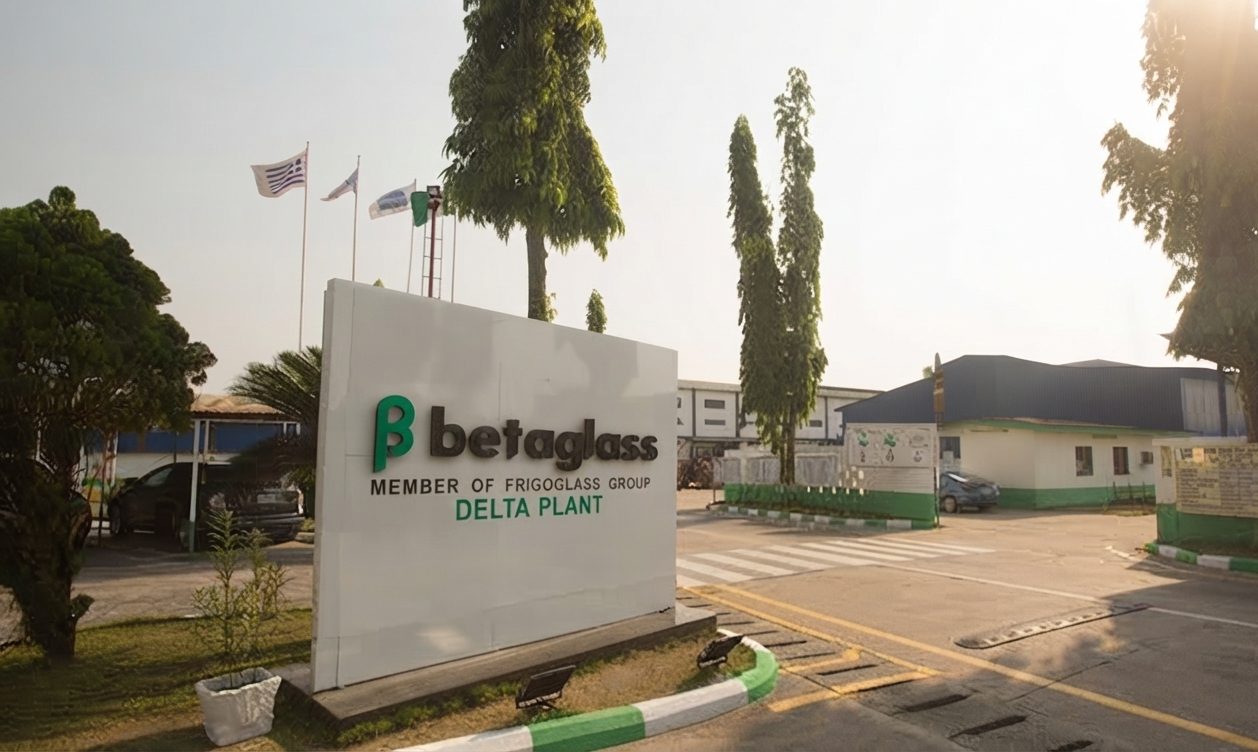
The current corporate reporting season offers insights into how major manufacturing entities are navigating the Nigerian economy. Beta Glass Plc, a leading player in the packaging and glass manufacturing sector, has officially released its unaudited financial statements for the first half of the year, painting a picture of resilience amid mounting operational challenges. Despite being weighed down by escalating input costs and the logistical hurdles typical of the local operating environment, the firm successfully pushed its revenue to an impressive N79.7 billion.
According to the official figures filed for the six months ended June 30, the top line grew modestly by 1.9 per cent. This built upon the N78.2 billion that was achieved during the corresponding period in the previous year. A deeper dive into the quarterly performance reveals that the momentum largely picked up speed during the second quarter. Between April and June, the company generated N42.1 billion in revenue, translating to a substantial 13.8 per cent jump compared to the N37.0 billion reported during the same timeframe last year.
Industry watchers note that this performance was heavily underpinned by a blend of steady domestic consumption and a strategic push into export markets. Alexander Gendis, the Chief Executive Officer of Beta Glass, explained that the firm has had to lean heavily on robust commercial execution to keep pace with demand. However, the journey has not been entirely smooth. The broader macroeconomic narrative of high inflation, steep energy tariffs, and expensive inbound logistics meant that margins faced notable compression.
While the top line expanded, the rising cost of production began to bite into the bottom line. The company reported a profit after tax of N16.1 billion for the opening half of the year, while the second quarter alone accounted for N8.3 billion of that figure, alongside earnings per share resting at N26.93. Leadership has pointed out that the first half comparison also suffered from a unique base effect. In the preceding year, several major corporate customers opted to frontload a significant portion of their annual packaging requirements early in the calendar cycle, creating an exceptionally high comparative baseline that made matching percentage jumps a challenging task.
To safeguard profitability going forward, management is deploying a dynamic pricing model designed to absorb ongoing market shocks and progressively restore healthy margins over the remainder of the year. By adjusting prices to accurately mirror reality while maintaining tight control over underlying operating expenditures, the company hopes to stay well ahead of its internal targets. Stakeholders will be watching closely to see how these proactive measures translate into bottom-line growth as the fiscal year marches into its final quarters.
Boardroom Voices Africa Insight
Beta Glass demonstrates how traditional manufacturing stalwarts must pivot toward agile pricing and export diversification to survive volatile macroeconomic cycles. While revenue expansion proves that core product demand remains sticky, the contraction in net profitability underscores an urgent reality across African boardrooms: volume growth alone cannot outrun structural cost inflation. For industrial leaders aiming to protect shareholder value in the coming quarters, success will depend heavily on optimizing local supply chains, aggressive energy management, and preserving operational efficiency against currency and logistics headwinds.