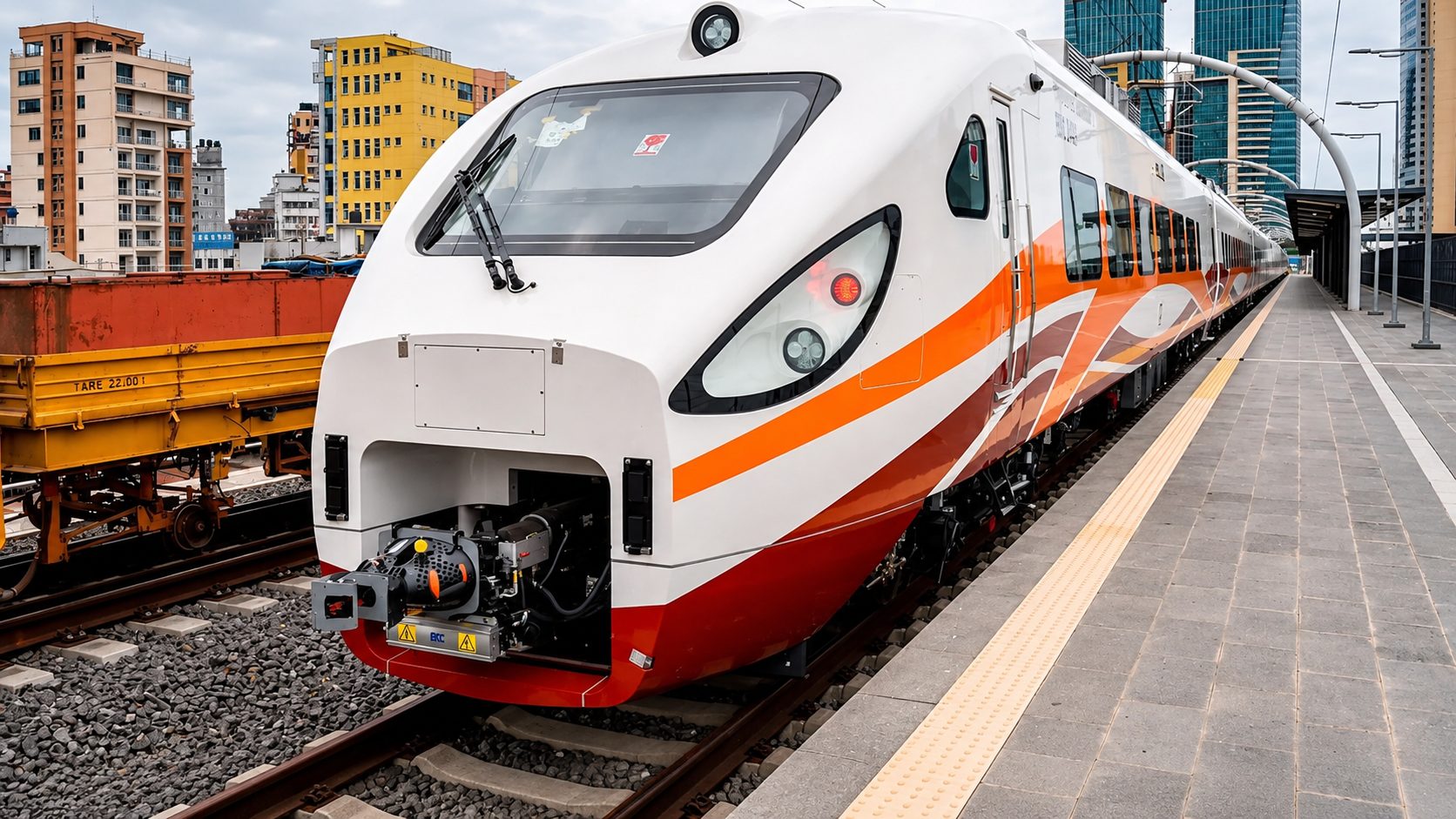
Tanzania is executing a massive structural overhaul of its primary trade routes, leveraging multi-billion-dollar investments in rail and maritime facilities to cement its position as the premier logistics anchor for East Africa. By replacing aging colonial-era networks with state-of-the-art corridors, the sovereign state is systematically removing historical friction points that have traditionally inflated the cost of cross-border commerce across the interior.
At the center of this national strategy is the flagship Standard Gauge Railway project, an electrified rail network backed by an estimated ten billion dollar price tag. Engineered to supersede the legacy meter gauge system, the multi-thousand-kilometer infrastructure development relies on sophisticated blended financing. State allocations merge with capital from commercial lenders, export credit agencies, and development finance institutions to fund the massive undertaking.
Early operational results are already transforming domestic movement. Commuter and freight runs linking the port metropolis of Dar es Salaam to the inland administrative center of Dodoma have dramatically compressed transit times. Trips that previously demanded up to ten hours of grueling highway travel are now completed in under four. Electric passenger units achieve velocities reaching one hundred sixty kilometers per hour, while freight configurations run at one hundred twenty kilometers per hour.
The long-term roadmap projects the tracks extending further toward Mwanza on Lake Victoria and Kigoma on Lake Tanganyika. These extensions will forge direct economic bridges into landlocked trading partners including Rwanda, Burundi, Uganda, and the Democratic Republic of Congo. Consequently, the corridor positions the nation as an indispensable transshipment hub for mineral wealth and agricultural output originating deep within the continent.
Concurrently, the primary maritime gateway at Dar es Salaam is undergoing an operational renaissance. A thirty-year concession agreement with Dubai-based logistics operator DP World pairs strategic state oversight with targeted private capital infusions scaling toward one billion dollars. These enhancements have drastically compressed vessel waiting times from approximately ten days down to three, while average freight discharge intervals plummeted from three hundred hours to twenty-eight. Advanced harbor dredging allows the facility to accommodate substantially larger commercial carriers, helping drive total cargo throughput to a record twenty-seven point seven million tonnes during the recent financial year.
Complementary measures are multiplying these maritime efficiencies. The establishment of specialized dry ports and adjacent industrial zones is successfully deconfining coastal terminals. Simultaneously, bilateral agreements are reviving historic regional pathways, highlighted by a Chinese backed one point four billion dollar overhaul of the TAZARA railway to modernize freight links with Zambia.
By tightly synchronizing high-speed electric rail loops with expanded maritime capacities, the country is engineering a formidable trade ecosystem. For regional enterprises and global institutional investors, the massive capital deployment signals a decisive pivot from transport bottlenecks toward high-velocity economic integration.
Boardroom Voices Africa Insight
The aggressive overhaul of Tanzania’s transport infrastructure illustrates a vital playbook for emerging markets seeking sustainable economic transformation. By deploying blended capital structures to de-risk massive long-term projects, the government is not merely building tracks and berths; it is actively constructing a competitive trade moat. For corporate leaders and regional investors, this convergence of state ambition and international finance signals that East Africa is shifting from a landscape of transit friction to one of high-velocity economic integration.