Morocco’s central bank has left its benchmark interest rate unchanged at 2.25% while lowering its economic growth projection for 2026, citing persistent global uncertainty and pressure from energy markets.
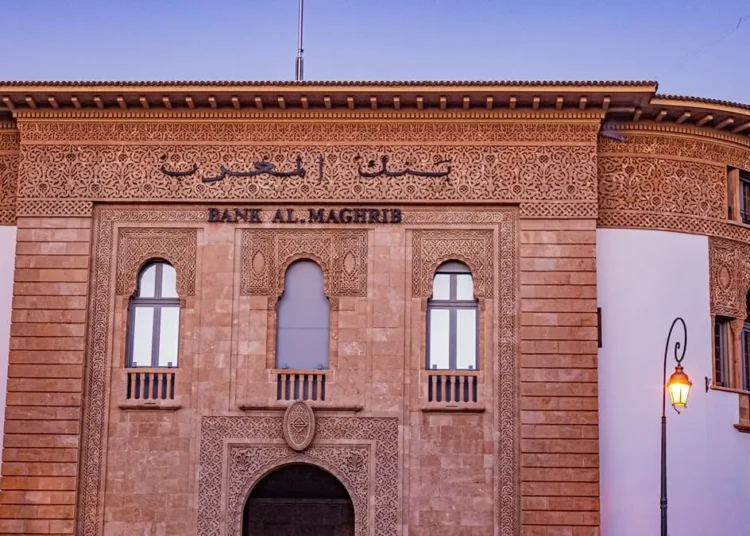
Bank Al-Maghrib (BAM) maintained the rate at its third quarterly policy meeting of the year in Rabat, as inflation remains relatively subdued. The central bank also pointed to geopolitical tensions, risks to food and energy supplies, elevated sovereign borrowing costs and climate-related pressures as factors clouding the economic outlook.
Inflation Remains Low
Morocco’s average inflation stood at just 0.3% during the first eight months of 2026. BAM expects inflation to average 0.7% for the full year, before rising to around 1.5% in 2027.
Underlying inflation is projected to increase from -0.2% this year to 2.2% in 2027, as the effect of falling food prices—particularly olive oil—weakens and imported price pressures remain elevated.
Growth Forecast Cut
BAM has reduced its 2026 growth forecast to 4.4%, compared with 4.9% recorded in 2025. Growth is then expected to slow further to 2.9% in 2027.
Agriculture is expected to provide a major boost this year, with agricultural output projected to expand by 16%, supported by an estimated cereal harvest of 93 million quintals. However, agricultural value added could decline by 7.6% in 2027 if cereal production returns closer to an average harvest of about 50 million quintals.
Outside agriculture, economic activity is forecast to expand by 3.1% in 2026 and accelerate to 4% in 2027.
Energy Bill Puts Pressure on External Accounts
Higher international energy prices are expected to increase Morocco’s import costs. BAM projects the country’s energy import bill will rise by 28.4% to MAD 138.1 billion in 2026, before easing to about MAD 116 billion in 2027.
Equipment imports are also expected to remain strong, reaching approximately MAD 250.7 billion, following projected increases of 15.6% this year and 8.8% next year.
Morocco’s automotive exports are expected to reach MAD 202.2 billion in 2027, while phosphate and related product exports are projected to rise by 9.7% in 2026 and 12.1% in 2027, reaching MAD 122.6 billion.
Tourism and Remittances Support Economy
Travel receipts are projected to reach MAD 160 billion in 2027, while remittances from Moroccans living abroad are expected to climb to MAD 136.3 billion.
Despite these inflows, BAM expects the current-account deficit to widen from 2.4% of GDP in 2025 to 4.6% in 2026, before narrowing to around 3% in 2027.
The country’s official reserve assets are forecast to reach MAD 502.8 billion by the end of 2026 and MAD 515.3 billion in 2027, equivalent to roughly five and a half months of imports.
Credit and Jobs
Bank lending to Morocco’s non-financial sector is expected to accelerate to 8.1% in 2026, up from 4.8% in 2025, before moderating to 6.1% in 2027.
Meanwhile, the government budget deficit is projected at 3.4% of GDP this year and 3.5% in 2027.
Morocco’s labour market has also shown improvement. Data from the second-quarter 2026 labour force survey indicated that the economy added approximately 406,000 jobs year-on-year, while the national unemployment rate fell to 9.5%. Unemployment stood at 11.9% in urban areas and 5.4% in rural areas.
With inflation contained but external risks and energy costs weighing on the outlook, Bank Al-Maghrib is maintaining a cautious approach to monetary policy as Morocco balances growth, investment and external pressures.