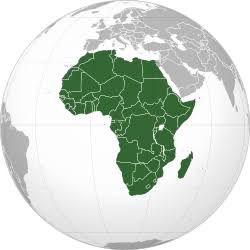
The World Bank has raised its 2026 economic growth forecast for Sub-Saharan Africa to 4.3%, up from the 4.1% projection made in April, as stronger economic performance across several major economies boosts confidence in the region’s outlook.
The latest forecast, contained in the World Bank’s Africa Economic Update, comes despite a challenging global environment marked by higher energy costs and disruptions linked to the conflict in the Middle East.
Africa’s economy grew by an estimated 4.1% in 2025, with the World Bank saying growth projections have been upgraded for nearly three-quarters of countries across the region.
Among the economies receiving upward revisions are Nigeria, Zambia, Ethiopia and Angola, with the World Bank pointing to years of economic reforms and improved economic management as factors beginning to support stronger growth.
Growth Still Not Reaching Enough People
Despite the improved outlook, the World Bank warned that stronger economic growth has yet to translate into significant reductions in poverty.
Per-capita income growth is expected to rise to just 1.8% in 2026, compared with 1.6% in 2025, highlighting the challenge of ensuring that headline economic growth creates more jobs and improves living standards.
“Economic activity in Sub-Saharan Africa continues to demonstrate remarkable resilience,” said Andrew Dabalen, the World Bank’s Chief Economist for Africa.
However, he stressed that the next challenge is converting economic expansion into more employment and better opportunities for the continent’s rapidly growing population.
AI Seen as Next Growth Opportunity
The World Bank is urging African governments to make greater use of artificial intelligence as a tool to raise productivity, create jobs and support economic development.
While African countries face significant gaps in infrastructure, computing capacity and investment compared with major AI markets such as the United States, Dabalen said the continent does not need to replicate the scale of spending seen in wealthier economies to benefit from the technology.
Instead, governments and businesses could focus on affordable, practical AI applications that can operate on widely available devices.
Potential uses include AI-powered learning tools for students, systems that help farmers identify livestock diseases and applications that automate accounting and other administrative tasks for small businesses.
The World Bank also highlighted shared data centres and stronger data protection frameworks as important foundations for wider AI adoption across Africa.
Debt and Global Risks Remain
The improved growth outlook comes with significant risks. A prolonged Middle East conflict, the El Niño weather phenomenon, elevated interest rates in advanced economies and high debt-servicing costs could weigh on growth.
The region’s debt-to-GDP ratio has stabilised at around 57%, according to the World Bank. However, roughly half of African countries are either in default or facing difficulties servicing their debt, underscoring continued pressure on government finances.
For Africa, the challenge now goes beyond achieving faster growth. The World Bank’s message is increasingly focused on whether governments can use technology, particularly AI, to turn economic expansion into productivity gains, jobs and broader improvements in living standards.