Zimbabwean billionaire Strive Masiyiwa’s Cassava Technologies has joined some of the world’s biggest technology companies in a new five-year initiative aimed at making artificial intelligence accessible to billions of people who speak languages currently underserved by AI systems.
The initiative, announced in New York on September 21, brings together 60 organisations, including Amazon, Google, Microsoft, OpenAI, Anthropic and Nvidia, with a shared goal of expanding AI access to an estimated 3.4 billion people who use languages that remain poorly represented in existing AI models.
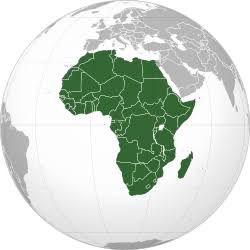
The partnership is being coordinated by the Gates Foundation and focuses heavily on Africa, where more than 2,000 languages are spoken, representing over 30% of the world’s estimated 7,000 languages.
Many AI systems have been trained predominantly on large volumes of digital content in a relatively small number of languages. This leaves millions of people unable to interact effectively with AI through their native languages, particularly through voice.
Under the initiative, participating organisations will focus on building open language-data infrastructure, establishing standards to measure progress, developing AI models and applications, and ensuring that data collection is carried out with appropriate privacy and consent safeguards.
The initiative also places significant emphasis on voice technology, recognising that AI needs to understand local dialects, expressions and speech patterns if it is to become genuinely useful across diverse African communities.
Cassava Technologies is contributing its growing African digital infrastructure and computing capabilities to the effort.
The company has established an AI factory in South Africa, providing Nvidia-powered computing capacity to developers and businesses across the continent. In March 2025, Cassava announced plans to deploy 3,000 GPUs in South Africa, followed by a further 9,000 units across Kenya, Nigeria, Morocco and Egypt.
The company also launched the Cassava AI Multi-Model Exchange, a platform designed to give African businesses access to AI models from companies including OpenAI, Anthropic and Google.
Earlier this month, Cassava also announced a partnership with Vodafone Business to develop what the companies describe as Egypt’s first AI factory.
The initiative extends beyond global technology giants. African organisations participating include Masakhane, a research collective focused on African languages; South Africa’s Lelapa AI; Data Science Nigeria; Deep Learning Indaba; Rwanda’s Digital Umuganda; and the Ethiopia AI Institute.
Other participants include AI4Bharat and Sarvam from India, Senegal’s telecommunications ministry, the UK’s Foreign, Commonwealth and Development Office, UNICEF and the World Bank.
For Cassava, the initiative builds on its wider strategy of developing Africa’s digital infrastructure while expanding access to the computing power and AI tools needed by businesses, developers and governments across the continent.
Masiyiwa, who founded Econet Wireless Zimbabwe in 1998 after a lengthy legal battle to break the country’s telecommunications monopoly, has since expanded his business interests into a broader digital infrastructure network spanning data centres, connectivity, cloud services and artificial intelligence.