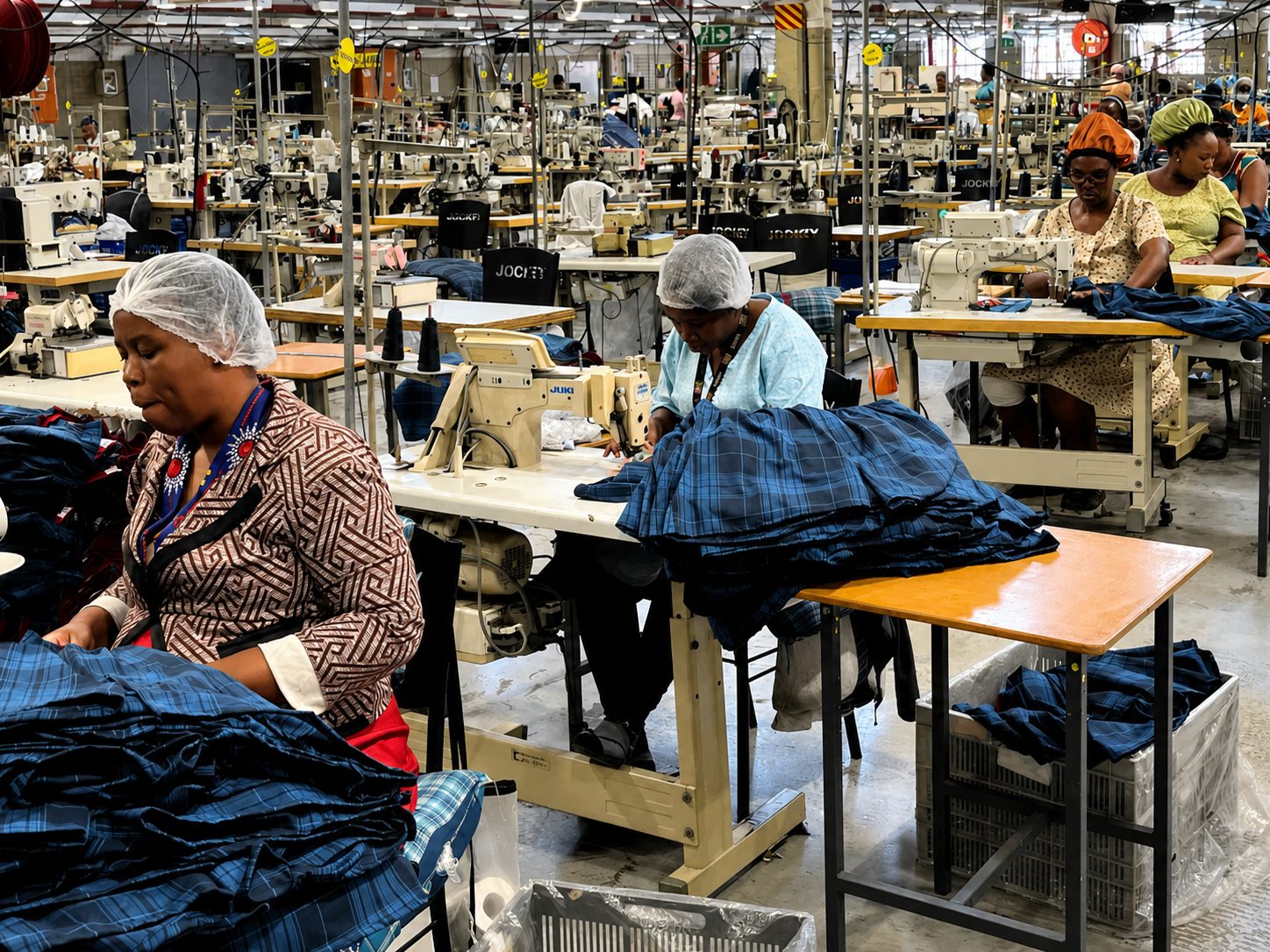
Rows of industrial sewing machines remain eerily silent across manufacturing floors in KwaZulu-Natal as industrial hubs grapple with a severe labor deficit. Following weeks of intense anti-immigrant demonstrations and targeted social pressures designed to open up job opportunities for local citizens, thousands of foreign nationals have departed the country. Factory proprietors and industry leaders note that the resulting void threatens to paralyze domestic textile production at a time when consumer demand is already exceptionally fragile.
The crisis is acutely visible in Newcastle, a vital center for the cut, make, and trim sector where apparel is assembled on behalf of major national retailers. Business owners report losing between twelve and nineteen percent of their workforce almost overnight. These departures have hit specialized operations hardest. While local labor can readily manage general assembly and overlocking tasks, complex procedures such as precision zipper insertion and advanced tailoring rely heavily on experienced foreign machinists who have spent years perfecting their craft.
The tension between national employment goals and industrial reality has created a complex operational stalemate. Proponents of the recent labor campaigns argued that reducing the number of foreign workers would alleviate high local unemployment figures. However, domestic applicants have been slow to fill the vacant positions. Industry analysts point out that many manufacturing wages struggle to compete with urban living costs, and local workers frequently find that entry-level salaries are largely consumed by daily commuting expenses. Consequently, managers find themselves unable to maintain production quotas, leading to canceled retail orders and shrinking margins.
The sector was already vulnerable before the current exodus. Prolonged economic stagnation, rising utility costs, and stringent regulatory scrutiny following government inspections have tested the resilience of independent producers. Factory operators explain that tight retail budgets leave little room to absorb escalating labor training costs or higher base pay without pushing consumer prices beyond what the average shopper can afford. Retailers themselves face difficult choices as they try to source inventory locally while consumer purchasing power remains constrained by broader macroeconomic headwinds.
Without an immediate intervention to bridge the skills gap or enhance wage structures, industry stakeholders warn that many small and medium enterprises will be forced to shut their doors permanently. The situation underscores a delicate structural dilemma for the broader regional economy, highlighting how rapidly immigration shifts can cascade through manufacturing supply chains and disrupt established commercial ecosystems.
Boardroom Voices Africa Insight
The current disruption in South Africa highlights a fundamental vulnerability in labor-intensive manufacturing ecosystems across the continent. When policy objectives driven by local socioeconomic pressures clash abruptly with specialized operational needs, supply chains inevitably fracture. For executive leadership and supply chain strategists, this crisis emphasizes the urgent necessity of investing in formalized, long-term local skills development programs rather than relying on reactive labor shifts. Sustainable industrial growth requires a balanced approach that protects domestic employment while preserving the specialized technical expertise essential for regional competitiveness.