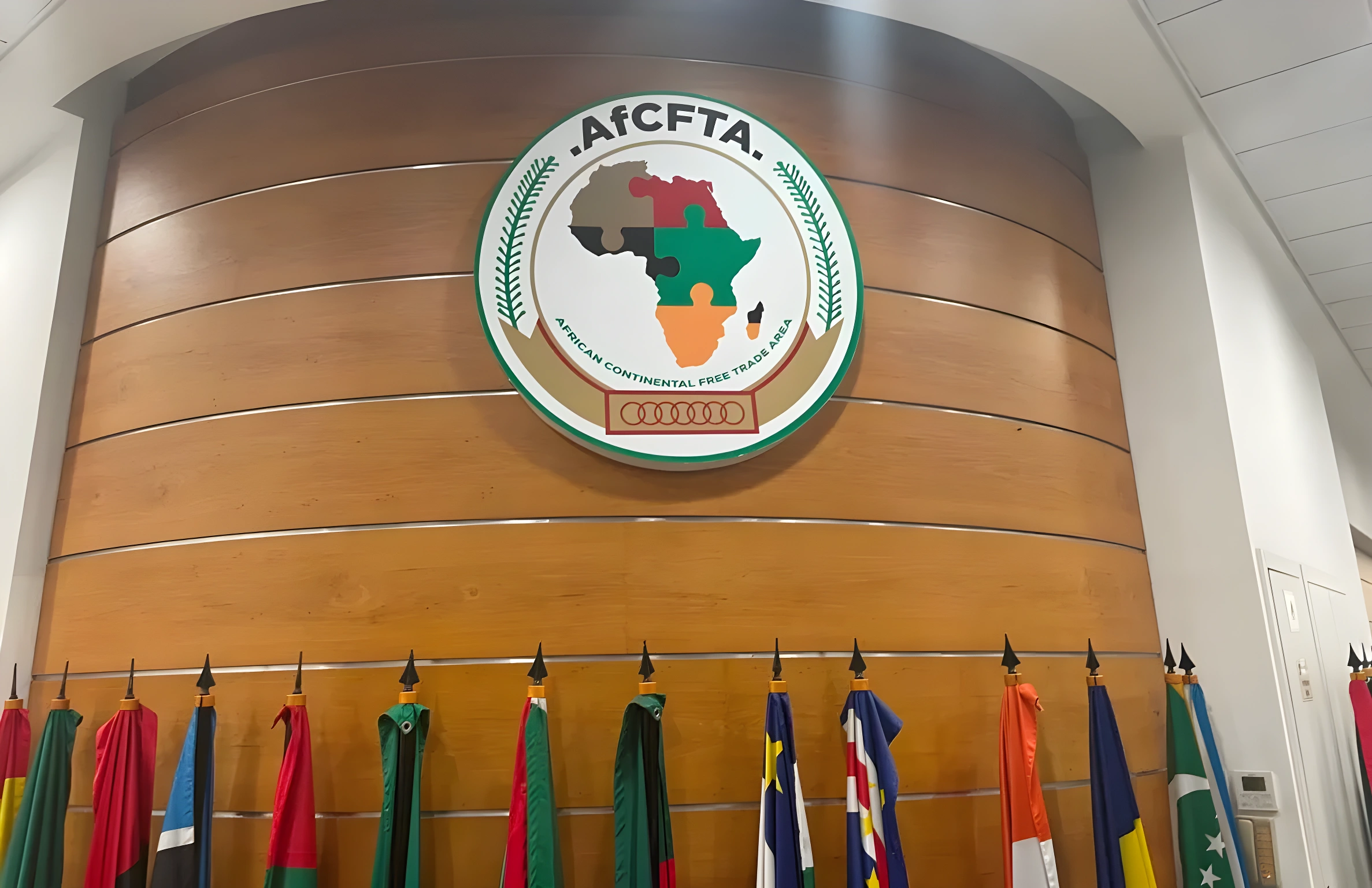
The Secretariat for the African Continental Free Trade Area has officially awarded a multi-decade concession to Bergmans Security Consultants and Supplies Limited, a Nigerian technology enterprise, to execute a comprehensive $3.1 billion customs modernization project.
The ambitious undertaking is designed to tackle the enduring logistical and administrative bottlenecks that have historically slowed commercial movement between participating nations. By deploying advanced digital architectures, integrated data systems, and non-intrusive inspection tools across major transit corridors, the initiative aims to build a unified electronic infrastructure for nearly fifty member states.
Wamkele Mene, the Secretary General of the continental trade bloc, noted during the formal signing that the framework provides the essential technological foundation needed to operationalize trade agreements effectively. The overarching objective is to drastically reduce transit times and eliminate redundant bureaucratic procedures without placing a heavy financial burden on individual national budgets.
Business operators across the region have long identified incompatible software platforms and lengthy clearance processes as major cost drivers. The new system will establish standardized digital documentation tracks and multilingual portals designed to serve a combined market of roughly 1.3 billion people, generating an estimated gross domestic product of $3.4 trillion.
Selecting an indigenous African technology provider reflects a growing confidence in local engineering capabilities to handle high-stakes regional infrastructure. Officials pointed to successful national digital optimization projects as proof of concept, demonstrating that homegrown innovations can scale effectively to meet continent-wide demands.
Saleh Ahmadu, the chairman of the Nigerian firm, emphasized that the multi-decade public-private partnership represents a historic milestone for African enterprises leading massive structural transformations. Under the agreement, the company will shoulder the initial capital deployment required to build out both physical border posts and smart digital networks.
As implementation gets underway, policymakers and corporate leaders will be watching closely to see how effectively individual countries integrate the new platform into their domestic legal frameworks. If successful, the initiative promises to lower transaction expenditures significantly, empowering smaller enterprises and accelerating the realization of long-term economic integration goals.
Boardroom Voices Africa Insight
This multi-billion-dollar concession signals a profound structural shift in how major infrastructure projects are conceptualized and executed across the continent. By bypassing traditional donor-funded models in favor of a robust public-private partnership anchored by an indigenous African technology firm, the trade secretariat is setting a powerful precedent for regional self-reliance. Success will ultimately hinge on seamless cross-border regulatory harmonization and political will, but the move successfully positions homegrown digital innovation at the absolute center of Africa’s economic destiny.