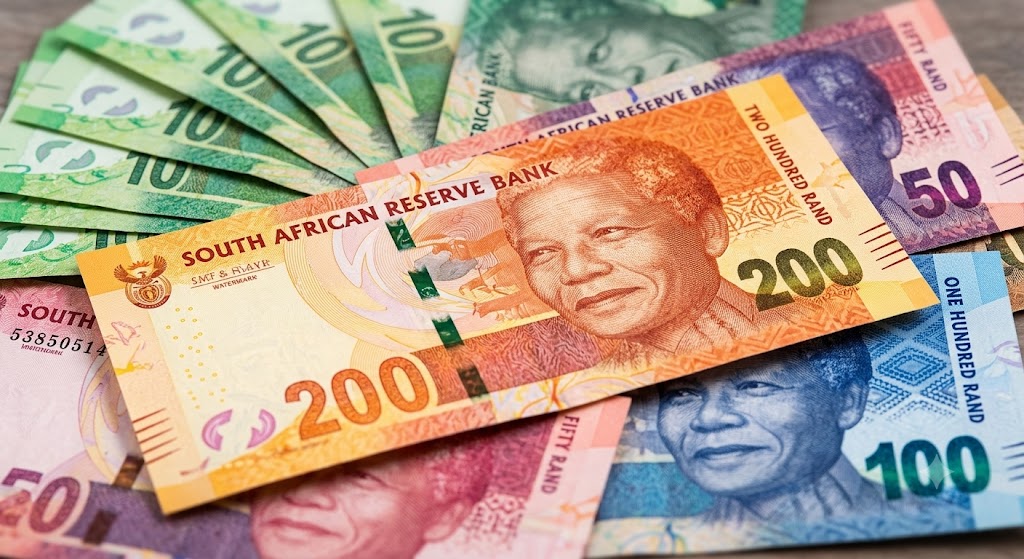
The global financial landscape experienced a significant shift on Tuesday as the South African rand marched forward against a retreating US dollar. The momentum built rapidly after fresh data from the US Labor Department revealed that consumer inflation in the world’s largest economy slowed much more than expected in June. This cool-down has effectively rewritten the script for monetary policy, and most economists believe it completely rules out any further interest rate increases from the Federal Reserve for the remainder of the year.
For emerging markets, the news was a welcome relief. The rand, which is highly sensitive to shifts in global sentiment and US monetary policy, capitalized on the momentum. By mid-afternoon, the local currency was trading at sixteen rand and thirty-seven cents to the dollar, strengthening by over half a percent from its previous close.
The catalyst for this market movement was the release of the US consumer price index. The data showed that annualized inflation cooled to three point five percent in June, marking a notable drop from the four point two percent recorded in May. This downward trajectory suggests that the Federal Reserve’s aggressive campaign of rate hikes is finally keeping a lid on price pressures. With inflation moving closer to the target of the central bank, the argument for keeping interest rates at multi-decade highs has lost its foundation, prompting investors to pivot away from the dollar.
The weakening of the US dollar index, which dropped about half a percent against a basket of major global currencies, opened a window of opportunity for yield-seeking investors to return to emerging markets. This global wave of optimism managed to overshadow somewhat lukewarm domestic data from South Africa. On the same day, local data showed that South African mining output contracted by five point four percent year on year in May, contrasting with a sharp expansion in the previous month.
Despite the pressure in the industrial sector, the broader financial markets in Johannesburg held their ground. The top forty index on the Johannesburg Stock Exchange managed to post modest gains, reflecting the positive spillover from international markets. Local government bonds, however, experienced some volatility, with the yield on the benchmark twenty-thirty-five bond edging slightly higher to eight point forty-two percent.
Ultimately, the day belonged to the bulls of the foreign exchange market. The decline in global inflation pressures provides the South African Reserve Bank with much-needed breathing room as it prepares for its next policy decisions.
Boardroom Voices Africa Insight
The sudden surge of the rand serves as a stark reminder of how deeply African economies remain tied to the decisions made in Washington. While a weaker US dollar and the suspension of Federal Reserve rate hikes ease the immediate servicing costs of dollar-denominated debt across the continent, this moment should not inspire complacency. True economic resilience on the continent cannot rely solely on the cooling of foreign inflation. African policymakers and corporate leaders must utilize this temporary breathing room to accelerate structural reforms, bolster domestic manufacturing, and diversify trade partners. Relying on favorable winds from the West is a fragile strategy, and building internal buffers is the only way to ensure sustainable growth when global tides inevitably turn again.