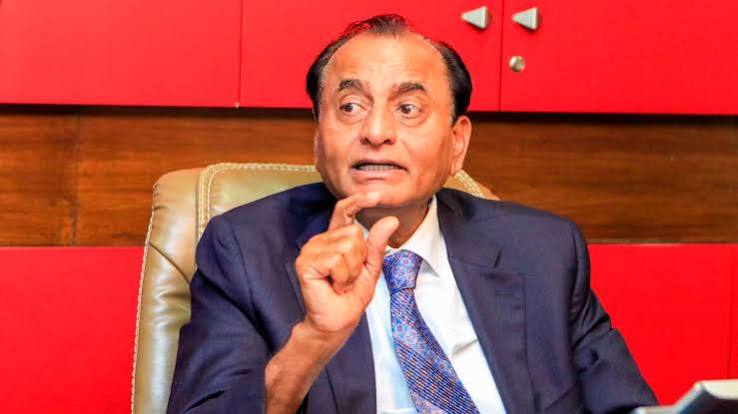
Kenyan billionaire Narendra Raval is preparing to expand his industrial footprint with a new cement plant in Kitui County, a project valued at up to $539 million by President William Ruto and expected to create 4,000 jobs.
The facility, being developed by Raval’s Devki Group in Ngaaie, will manufacture clinker, the principal ingredient in cement, using locally sourced raw materials. The project is expected to begin operations in mid-2027 and will become Kitui County’s first cement factory.
Speaking at Tseikuru grounds in Mwingi North ahead of Tuesday’s groundbreaking ceremony, Ruto said the investment was worth 70 billion Kenyan shillings ($539 million) and urged young people in the region to prepare for employment opportunities at the facility.
The president’s valuation exceeds the 50 billion shillings ($385 million) previously cited by Devki Group. The difference between the two figures has not been explained.
The project is expected to become the largest private investment in Kitui County, positioning the region as a new centre for cement and clinker production while supporting employment and industrial development.
Raval Expands Kenya’s Clinker Production Capacity
The Kitui investment forms part of Raval’s broader strategy to strengthen domestic clinker production and reduce Kenya’s reliance on imported supplies.
In 2024, Devki’s Cemtech subsidiary commissioned a clinker plant in West Pokot County with a production capacity of 6,000 tonnes per day, expanding the group’s presence in the country’s cement value chain.
Kenya introduced a 17.5% levy on imported clinker in 2023, a policy that gives domestic producers an advantage as manufacturers seek to manage input costs and reduce exposure to international supply disruptions.
The Kitui project comes amid a wider investment drive by industrialists seeking to expand clinker production across East Africa. The regional race has attracted substantial capital as producers position themselves to benefit from growing construction demand and regional infrastructure development.
For Devki, increasing domestic production capacity could strengthen its position in Kenya’s cement market while creating opportunities to serve customers across the wider region.
Ruto Promises Better Conditions for Investors
Ruto has presented the investment as evidence of Kenya’s ambitions to attract large-scale industrial projects and generate employment.
During his visit to the Ukambani region, the president warned individuals seeking bribes or demanding shares from investors, saying his administration would act against such practices.
He also claimed that Africa’s richest man, Aliko Dangote, had previously considered establishing a cement plant in Kitui before opting to invest in Tanzania. Ruto blamed the previous administration for the loss of that potential investment.
The comments highlight the competition among East African countries to attract industrial capital, particularly in sectors such as cement, where access to raw materials, energy, transport infrastructure and growing construction markets can determine investment decisions.
From Indian Migrant to East African Industrialist
Raval moved from India to Kenya in 1981 at the age of 19 and built Devki Group into one of East Africa’s major industrial conglomerates.
The group’s businesses include Simba Cement, National Cement and Maisha Mabati, with operations spanning Kenya, Uganda, Tanzania, Rwanda and the Democratic Republic of Congo.
Its interests across cement, steel and building materials have positioned the group to benefit from demand linked to housing, infrastructure and industrial development throughout the region.
The Kitui factory represents another major step in Raval’s expansion strategy, with the potential to deepen local manufacturing, create thousands of jobs and increase Kenya’s capacity to produce a key material used in construction.
As the project advances towards its planned 2027 start-up, its actual investment cost, construction progress and ability to deliver the promised employment will be important measures of its economic impact.