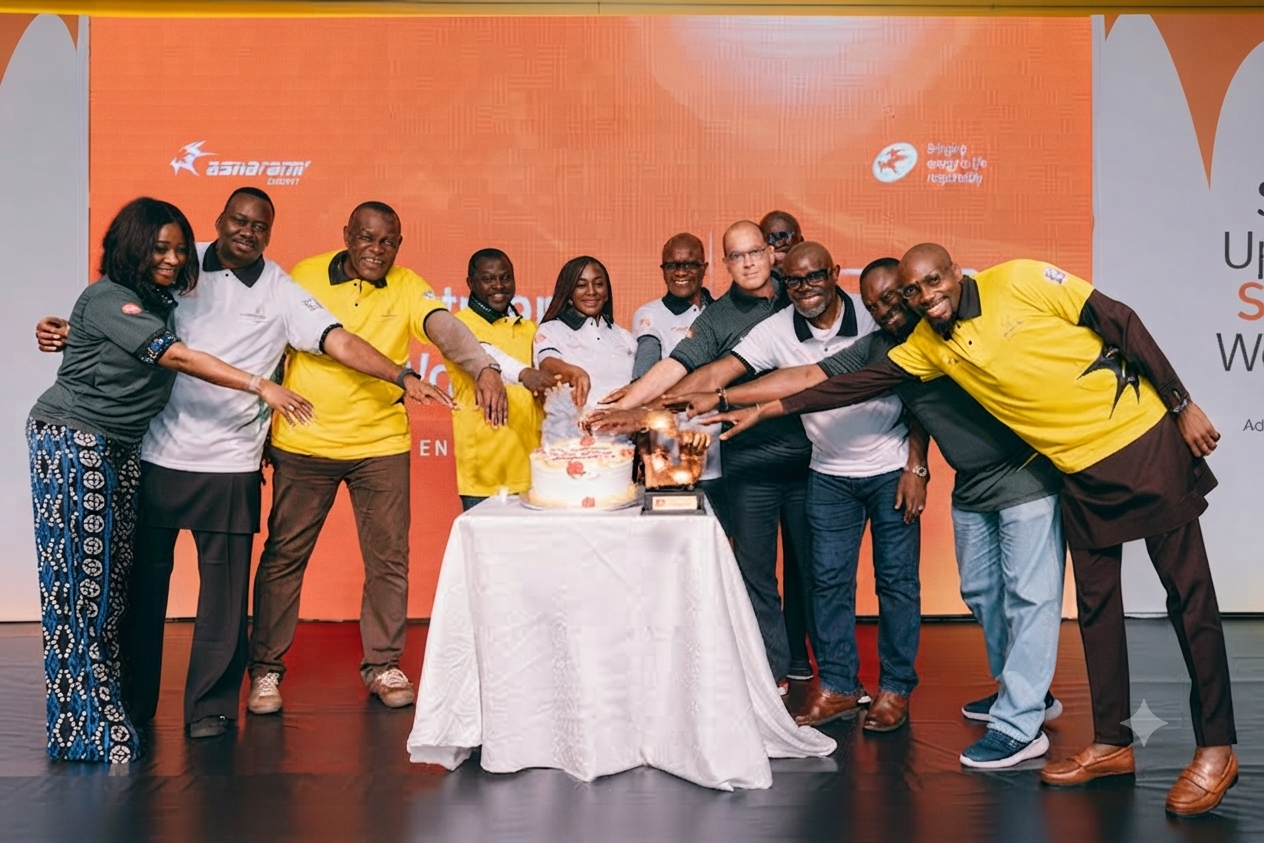
Asharami Energy Limited, operating as the upstream exploration and production arm of Sahara Group, has achieved a major safety milestone by recording six million Lost Time Injury-free man hours across its OML-148 asset operations in Nigeria. Delivered through its operational subsidiary, Enageed Resources Limited, this safety benchmark reflects years of diligent execution where thousands of workdays were completed without a single workplace incident causing operational downtime.
This accomplishment coincides with the company accelerating a broad multi-year expansion strategy. Asharami Energy has set its sights on scaling crude oil production to 350,000 barrels per day alongside one billion standard cubic feet per day of natural gas output by the year 2030. Industry observers note that achieving such aggressive output goals while maintaining an immaculate safety record highlights a rare balance between rapid industrial scale and rigorous risk mitigation.
To support these long-term production targets, the enterprise is implementing a multi-rig acquisition program that includes seven advanced drilling and workover units. This fleet enhancement incorporates heavy-capacity machinery, such as a 2,000-horsepower land rig deployed for gas development well spudding at the Okoloma-02 field, alongside ongoing drilling operations across the Oki field area. Oversight of these technical campaigns and rig fleet operations is managed through Arahas Global Oilfield Services, a specialized subsidiary within the conglomerate.
The technical initiatives merge upstream commercial objectives with stringent health, safety, security, and environment frameworks. Institutional stakeholders, including Nigerian Upstream Investment Management Services, have validated the asset delivery standards on OML-148, underscoring the disciplined coordination needed to manage complex field developments while expanding reserve capacities.
Beyond production volumes and safety metrics, Asharami Energy has closely integrated its operational roadmap with broader continental decarbonization objectives. The company made history as the first indigenous Nigerian upstream operator to join the United Nations Environment Programme Oil and Gas Methane Partnership 2.0. This framework requires the operator to continuously track, transparently report, and aggressively abate fugitive methane emissions across all active assets.
This environmental drive forms an essential pillar of Sahara Group’s overarching strategy to achieve net-zero operational emissions by 2060. By pairing methane mitigation directly with core field development, the firm proves that scaling hydrocarbon production to satisfy growing African energy demands can coexist smoothly with responsible environmental stewardship and high governance standards.
Boardroom Voices Africa Insights
For corporate directors and energy sector executives across Africa, Asharami Energy’s latest milestone illustrates that uncompromising safety protocols directly protect enterprise capital and project timelines. Within complex upstream environments, operational interruptions caused by safety oversights severely damage financial yields and erode institutional trust with state regulators and joint venture partners.
As local independent operators increasingly step forward to acquire and optimize mature assets relinquished by international oil majors, corporate boards must guarantee that ambitious expansion plans are matched by robust governance. Securing multiple high-capacity rigs and scaling output toward 350,000 barrels per day demands deep institutional oversight, continuous employee training, and clear lines of accountability at every level of the organization.
Furthermore, embedding environmental frameworks such as UNEP methane tracking protocols into everyday asset management strengthens long-term corporate resilience. Boards that treat environmental compliance and safety governance as strategic assets rather than routine administrative burdens will consistently unlock operational efficiencies, reduce capital costs, and secure a lasting competitive advantage as global energy markets continue to shift.