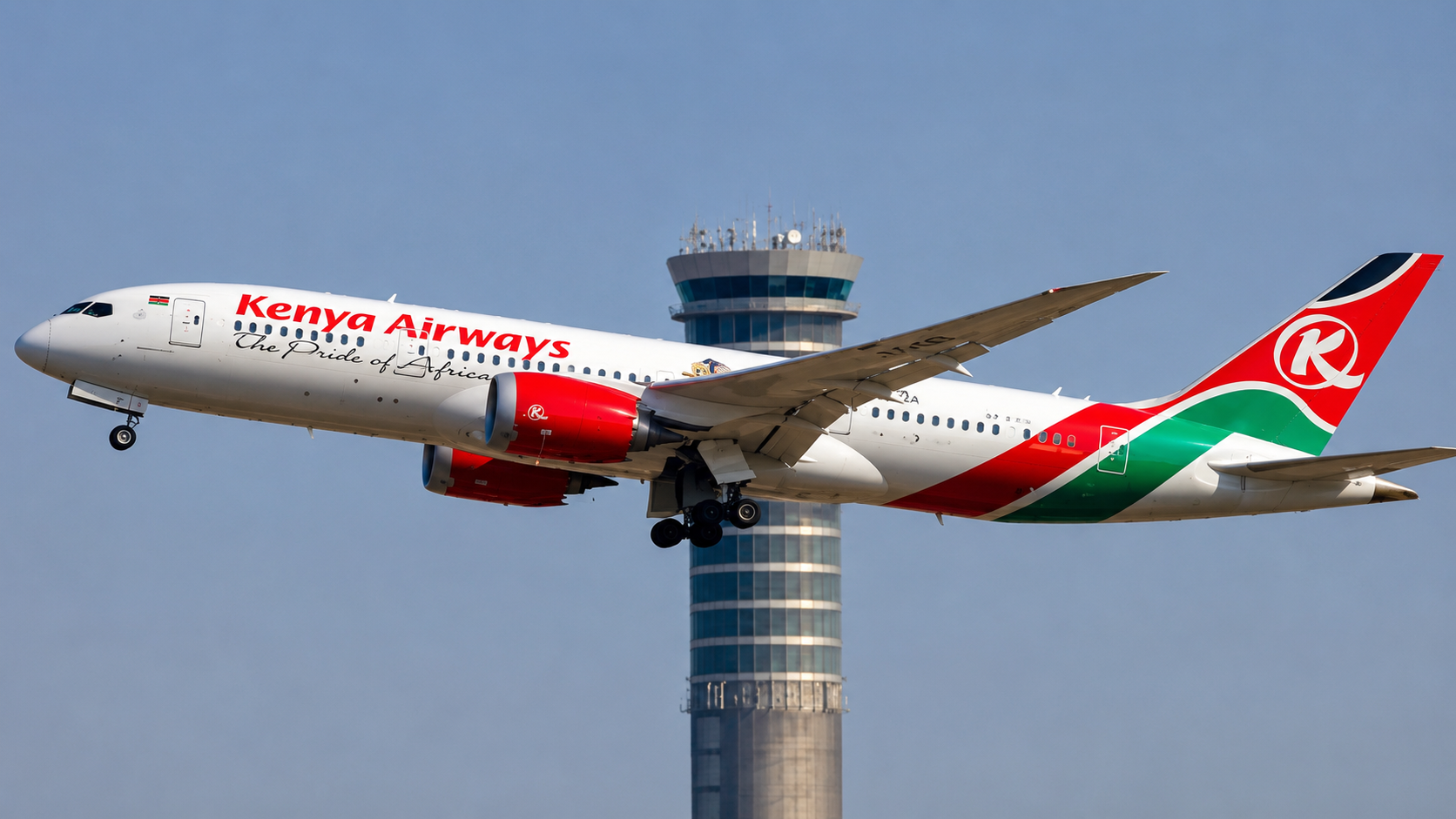
Global supply chain disruptions continue to ripple through the international aviation sector as geopolitical tensions abroad directly impact balance sheets across the African continent. Kenya Airways has announced that its fuel expenses surged by 72% during the current half-year, driven entirely by the ongoing military conflict in the Middle East.
Speaking during a business briefing in Nairobi, executive leadership detailed the severe economic pressures currently confronting the national carrier. Jet fuel now accounts for roughly 50% of the airline’s total operational expenditures, creating a narrow margin for error in an already volatile market environment. Beyond soaring commodity prices, the carrier is also grappling with stubborn supply chain bottlenecks that have delayed the delivery of critical aircraft maintenance parts and restricted fleet availability.
These compounding macroeconomic challenges arrive as the airline attempts to navigate tight capacity constraints. While passenger demand remains exceptionally strong across active routes, management noted that fleet limitations make it difficult to fully capitalize on existing market opportunities. Executives emphasized that every corporate contract is currently undergoing rigorous review to identify immediate cost-saving measures, noting that profit per seat remains remarkably thin. Analysts point out that unless global shipping lanes stabilize and fuel markets find equilibrium, carriers operating out of emerging hubs will likely need to pass incremental expenses downstream or risk prolonged financial strain.
Boardroom Voices Africa Insight
The financial predicament facing Kenya Airways underscores a vital structural vulnerability for African carriers dependent on imported energy. When geopolitical shocks choke critical trade corridors like the Strait of Hormuz, the impact is felt acutely thousands of miles away in East Africa. For corporate boards across the continent, this crisis serves as a stark reminder that resilience requires diversified supply partnerships, robust hedging strategies, and proactive treasury management to insulate foundational operations from external shocks over which they have no direct control.