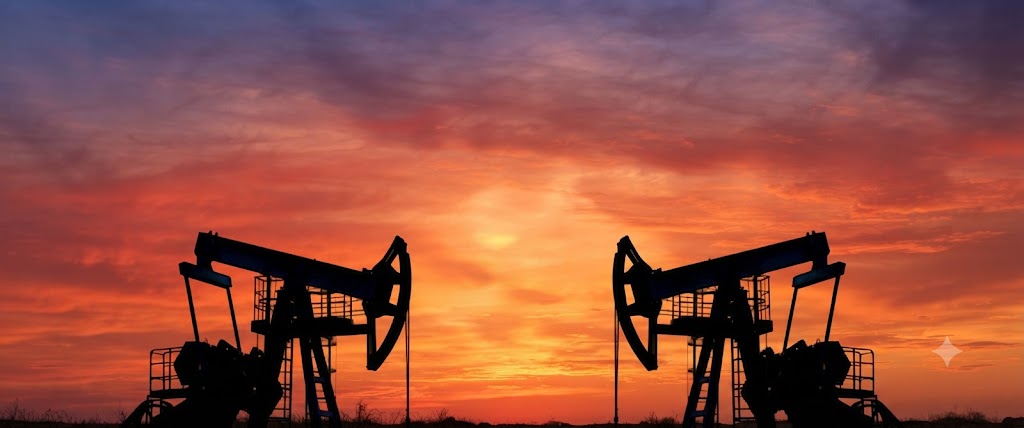
Oil prices continued their upward momentum this Wednesday, driven by the intensifying geopolitical friction between Washington and Tehran. The market is reacting sharply to President Donald Trump’s decision to reimpose a naval blockade across all Iranian ports, a move exacerbated by Tehran’s recent retaliatory strikes against U.S. infrastructure in the region.
Oil prices rose early Wednesday due to these tensions. Brent crude increased 0.7% to $85.31 per barrel, while West Texas Intermediate (WTI) gained 0.4% to reach $79.69 per barrel.
At the heart of the crisis is the Strait of Hormuz, a narrow maritime chokepoint through which approximately 20 percent of the world’s daily oil consumption passes. As naval tensions escalate and the prospect of a sustained blockade grows, the shipping industry is navigating a hazardous environment. Tanker operators are now facing mounting insurance premiums and potential delays as they navigate waters where the freedom of navigation is increasingly being challenged. Even as military officials on both sides project strength, the market is pricing in the tangible fear that any disruption to this artery would result in an immediate, physical supply shock that neither inventories nor alternative pipelines could easily mitigate.
Beyond the immediate price of a barrel, the broader economic implications are becoming increasingly difficult for global policymakers to ignore. High energy costs serve as a stubborn inflationary force, threatening to undo the progress central banks have made in stabilizing consumer prices over the past year. Should these elevated prices persist, the U.S. Federal Reserve and other major central banks will likely be compelled to maintain higher interest rates for longer, potentially stifling economic growth and tightening credit conditions for businesses worldwide. The ripple effects are already being felt in the transportation, logistics, and manufacturing sectors, where companies are being forced to absorb higher overheads or pass the costs onto an already strained consumer base.
For global business leaders, this situation highlights the imperative of energy security as a central pillar of corporate strategy. The reliance on centralized shipping routes is being exposed as a structural vulnerability that no amount of market efficiency can fully insulate against. Companies are now looking at diversifying their energy sources, accelerating the transition to localized power grids, and reassessing their exposure to regions prone to systemic geopolitical risk. The era of assuming uninterrupted access to affordable energy is being replaced by a more cautious, contingency-based approach to procurement and operational planning. As the situation remains fluid, the market will continue to trade on sentiment and the potential for worst-case scenarios, keeping volatility as the new baseline for the foreseeable future.
Boardroom Voices Africa Insight
The current crisis serves as a visceral reminder that modern corporate success is inextricably linked to global geopolitical stability. This global volatility is a critical prompt to move beyond reactive operational management. It is time to prioritize domestic energy independence and invest in regional infrastructure that hedges against the fragility of international supply chains. Leaders who build resilience into their energy architecture today will be the ones who steer their organizations through the inevitable economic storms of tomorrow.