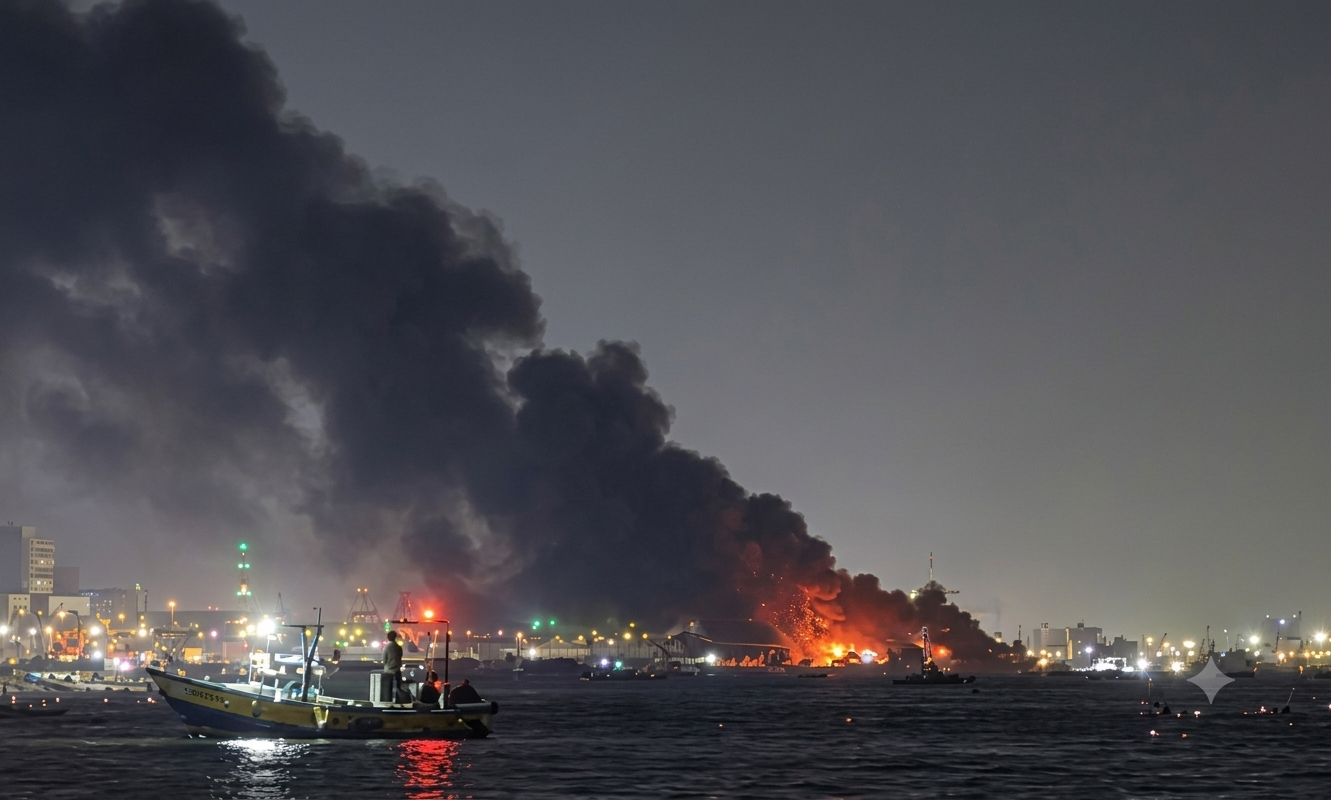
The short-lived maritime ceasefire between the United States and Iran has collapsed following a series of military exchanges in the Strait of Hormuz. This sudden return to open hostility shatters the 60-day memorandum of understanding signed in mid June 2026 and marks a volatile pivot for global supply chains.
Following attacks on three commercial merchant vessels in the waterway, US forces launched a wave of retaliatory strikes against military targets. With Washington officially declaring the truce over, commercial operators have been plunged back into an era of weaponized trade where safety cannot be guaranteed through one of the world’s most critical energy and cargo chokepoints.
A Sharp Escalation in Global Maritime Risk
The breakdown of the June truce has instantly erased recent progress made toward normalizing traffic through the Persian Gulf. Before the 2026 conflict, the Strait of Hormuz handled an average of 138 commercial vessels daily, moving roughly 20 percent of the world’s petroleum liquids and liquefied natural gas.
Recent maritime tracking intelligence shows that daily transits plummeted to just 23 vessels this week as major global shipping alliances suspended operations. The sudden halt has left an estimated 6,000 seafarers stranded aboard hundreds of ships in the region, while the International Maritime Organization has advised all operators to avoid the corridor entirely.
Why Strategic Shipping Corridors Matter
Maritime chokepoints are the invisible architecture of the global economy, and any prolonged closure triggers a direct macroeconomic cascade.
Global shipping networks rely on these narrow passages to:
- Maintain predictable transit times for manufacturing inputs.
- Transport bulk agricultural fertilizers and industrial commodities.
- Stabilize global energy pricing and prevent severe currency volatility.
- Keep freight insurance premiums manageable for international traders.
- Prevent structural supply shocks across consumer markets.
When a primary chokepoint fails, the entire network absorbs the shock, forcing a rapid reallocation of global vessel capacity and equipment.
Africa’s Geopolitical Positioning and the Cape Alternative
With both the Red Sea and the Strait of Hormuz heavily compromised simultaneously, the global logistics industry is reverting to the primary alternative: rerouting vessels around the Cape of Good Hope.
This massive shift redirects a significant portion of global maritime traffic along the African coastline. While this increases the strategic importance of African maritime geography, it places severe operational demands on regional infrastructure. Ports from East Africa down to South Africa are bracing for an influx of vessels seeking bunkering services, emergency maintenance, and refueling, testing the limits of continental port efficiency.
Supply Chain Resilience Drives Corporate Survival
One of the defining lessons of this renewed disruption is that corporate resilience has surpassed speed as a core operational metric.
Institutional investors and corporate stakeholders increasingly favor organizations that maintain:
- Diversified multitiered sourcing networks rather than single-source dependencies.
- Robust buffer stocks of critical components and raw materials.
- Clear visibility into tier two and tier three supplier geographies.
- Flexible logistics partnerships capable of pivoting between sea, air, and overland routes.
- Dynamic financial hedging strategies to absorb sudden commodity price shocks.
For mid-market and large enterprises alike, supply chain redundancy is no longer a luxury; it is a baseline requirement for capital attraction and business continuity.
Executive Leadership in a Volatile Macro Environment
The return of systemic maritime disruption highlights the critical role of decisive executive leadership during macroeconomic shocks.
Successful chief executives are moving away from reactive firefighting and are instead structurally reengineering their business models. Leaders must balance aggressive regional growth with disciplined financial management, especially as Brent crude experiences heightened volatility and fuel costs flow directly into freight rates.
The businesses that protect their margins are those whose leadership teams proactively adjust transit time assumptions, renegotiate long-term freight agreements, and hedge against currency fluctuations before the full impact hits domestic markets.
What This Means for African Business
The unfolding crisis presents both acute challenges and strategic openings for African enterprises.
The Challenges: Net energy importers across the continent face an immediate threat of imported inflation as higher global crude prices translate into rising domestic fuel and logistics costs. Importers relying on inputs from Asia and the Middle East must prepare for extended lead times, as the detour around the Cape adds thousands of nautical miles to standard voyages.
The Opportunities: However, this environment also accelerates the argument for regional integration under the African Continental Free Trade Area. As long-haul international shipping becomes more costly and unpredictable, local manufacturing, nearshoring, and intra-African trade networks become highly competitive alternatives for securing corporate supply chains.
Boardroom Voices Africa Insight
The collapse of the June truce proves that geopolitical risk is no longer a peripheral concern for African boards; it is an active line item on the profit and loss statement.
As global capital flows become more sensitive to systemic volatility, African corporate leaders cannot afford a passive stance. The current disruption rewards agility and structural preparedness. Organizations that proactively build strategic redundancies, leverage local trade corridors, and maintain top-tier corporate governance will not just survive the current shipping shock; they will position themselves as highly resilient partners for global capital. The future belongs to boardrooms that actively convert macroeconomic volatility into a catalyst for operational transformation.