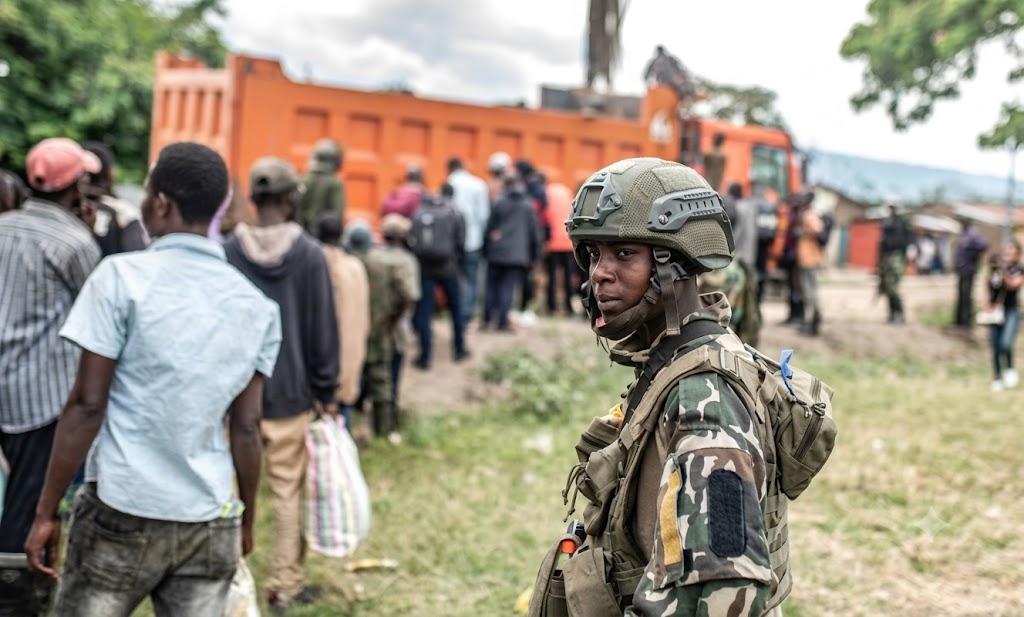
The ongoing crisis involving the M23 rebel group in the eastern Democratic Republic of the Congo (DRC) and allegations of Rwandan support for the insurgents have once again drawn global attention. Beyond the immediate humanitarian crisis and diplomatic fallout, the conflict raises deep questions about its broader impact on regional business, investment, and democratic governance. In today’s highly connected global economy, local instability ripples outward, disrupting trade corridors, discouraging foreign direct investment, eroding public institutions, and threatening the very economic foundations that democratic societies rely on.
United Nations experts and the United States government have repeatedly confirmed that Rwanda backs the M23 rebel group operating in eastern DRC. While Kigali has historically denied these claims, Rwandan officials have recently acknowledged security coordination with the rebels, framing it as a necessary measure to counter militias opposing the Rwandan government.
Eastern DRC holds some of the world’s largest deposits of critical minerals, including coltan, cobalt, tin, and gold. These raw materials are essential for manufacturing smartphones, computers, electric vehicle batteries, and other consumer technologies. Unfortunately, the persistent conflict allows armed groups like M23 to tighten their grip on these lucrative supply chains and exploit local populations.
Prolonged conflict also erodes democratic governance. Instead of investing in education, healthcare, infrastructure, and job creation, regional governments are forced to divert critical public funds toward security and defense. This environment makes it incredibly difficult to tackle corruption, strengthen public institutions, or build political stability. Consequently, millions of people have been displaced in eastern Congo, resulting in widespread unemployment, severe poverty, and shattered economic productivity. This economic decay, in turn, feeds a vicious cycle by placing immense pressure on fragile democratic systems.
Moreover, the fallout carries severe economic risks for Rwanda itself. Kigali faces mounting international pressure, including threats of reduced foreign aid and potential restrictions on its own mineral exports.
Ultimately, the situation in eastern DRC shows how deeply security is bound to economic and political progress. The abundance of critical minerals, which should be a foundation for national wealth, instead makes the region a target for competing armed groups. When governments must prioritize basic survival over public services, democratic development stalls, leaving the population to bear the brunt of displacement and poverty. For the DRC, breaking this cycle remains the only viable path to long term stability and growth.
Boardroom Voices Africa Insight
From a corporate and strategic investment perspective, the ongoing crisis in eastern DRC is a stark reminder that Africa’s economic potential cannot be fully realized in isolation. For multinational corporations and regional businesses alike, the instability in the Great Lakes region is not just a localized humanitarian issue; it is a direct bottleneck to continental supply chains, logistics, and cross border trade. As Africa moves toward deeper economic integration, corporate leaders must champion transparent mineral sourcing and push for stable, predictable regulatory environments. True economic progress on the continent will require security frameworks that protect both human lives and the investment capital needed to build sustainable industries.