The Federal Government of Nigeria has unveiled a major strategic path to accelerate its economic footprint, revealing that a comprehensive expansion of the domestic credit economy could inject more than 100 billion dollars in incremental value into the nation. This ambitious projection is part of a broader, systemic blueprint designed to transition the West African powerhouse from a period of intense macroeconomic stabilization toward sustainable, long term wealth creation.
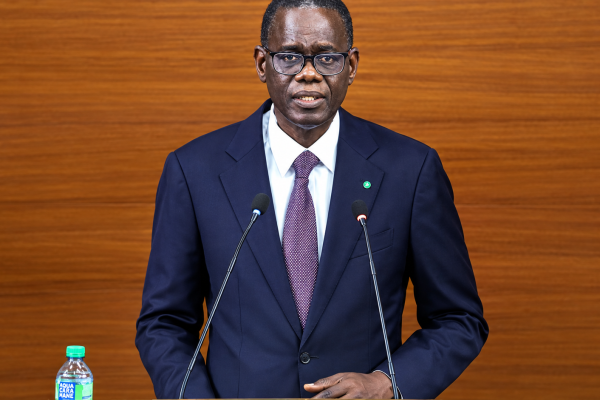
Speaking at a high level gathering of corporate leaders in Lagos, the Minister of Finance and Coordinating Minister of the Economy, Taiwo Oyedele, explained that optimizing the national credit architecture stands as one of the most vital catalysts for realizing Nigeria’s target of a one trillion dollar economy by 2030. The administration has spent months conducting granular assessments of the economy, identifying specific growth sectors, emerging industries, and the necessary timelines to unlock latent capital.
According to the treasury chief, the fundamental objective of current policy reforms is to establish a reliable transmission mechanism. The government intends to convert hard won policy stability into active investment, translate those investments into tangible industrial productivity, and ultimately transform productivity into stable employment and rising real incomes for the citizenry.
To sustain this upward trajectory, policy makers emphasize that Nigeria requires a massive influx of both domestic and foreign capital distributed across micro, small, and large scale enterprises. Addressing the business community, government representatives noted that capital is inherently global and highly objective, flowing only toward jurisdictions that offer stable policies, reliable public institutions, and the consistent enforcement of the law. Consequently, the state is prioritizing regulatory predictability to position the country as a premier destination for international long term investment.
A major pillar of this credit expansion strategy involves bringing the massive informal sector into the structured financial system. Government data indicates a remarkable surge in formalization, with the Corporate Affairs Commission reporting that an average of 10,000 informal businesses are applying for official registration every single day. This rapid rate of formalization has surpassed official projections, presenting a unique opportunity to scale up national productivity.
The state plans to support these newly registered entities by providing targeted capacity building, enhancing managerial skills, and facilitating access to affordable capital. Financial support mechanisms are already being deployed, including tax incentives and direct credit facilities. The presidency has approved substantial funding allocations through the Bank of Industry and the Bank of Agriculture to ensure that small enterprises can secure the non inflationary credit needed to expand their operations.
In tandem with fiscal interventions, the central monetary authority is actively working to de risk the business environment. Central Bank of Nigeria Governor Olayemi Cardoso recently highlighted a dramatic recovery in the nation’s external position, noting that net foreign exchange reserves have rebounded to approximately 40 billion dollars, up from a precarious low of about 3 billion dollars at the start of the reform cycle. This substantial buffer, coupled with gross external reserves rising to about 52 billion dollars, has restored crucial market confidence and stabilized the volatile foreign exchange market.
With the foundational work of stabilizing the currency and curbing speculative pressures largely completed, the central bank is urging commercial lenders to pivot away from short term trading activities and focus on financing productive, long term local industries. By deepening the domestic capital markets and fostering collaborative frameworks with international institutions, the financial regulator aims to transform Nigeria into the primary financial gateway for the African continent.
Boardroom Voices Africa Insight
The ambitious projection of a 100 billion dollar economic windfall from credit expansion highlights a critical turning point for Nigeria’s financial ecosystem. For decades, the primary bottleneck to sustained industrial growth in Africa’s most populous nation has not been a lack of entrepreneurial talent, but rather the prohibitive cost and extreme scarcity of structured credit. The transition toward a robust credit economy is a highly welcome development, but its success hinges on execution.
To truly unlock this 100 billion dollar potential, the government and the central bank must collaborate closely with the private sector to lower the crowd out effect. As long as government debt instruments yield highly attractive, risk free returns, commercial banks will remain hesitant to extend credit to MSMEs. True credit expansion requires deep institutional reforms, including a functional national identity system, unified collateral registries, and credit scoring mechanisms that accurately assess risk in the informal sector.
Furthermore, the surge in business registrations presents a goldmine for corporate Africa. If financial institutions can successfully design tailored, low interest credit products for these 10,000 daily applicants, they will not only catalyze grassroots economic growth but also secure a highly loyal, rapidly growing customer base. The foundations for a credit led economic renaissance are being laid, and the forward thinking businesses that align their strategies with this transition will undoubtedly lead the next generation of African conglomerates.