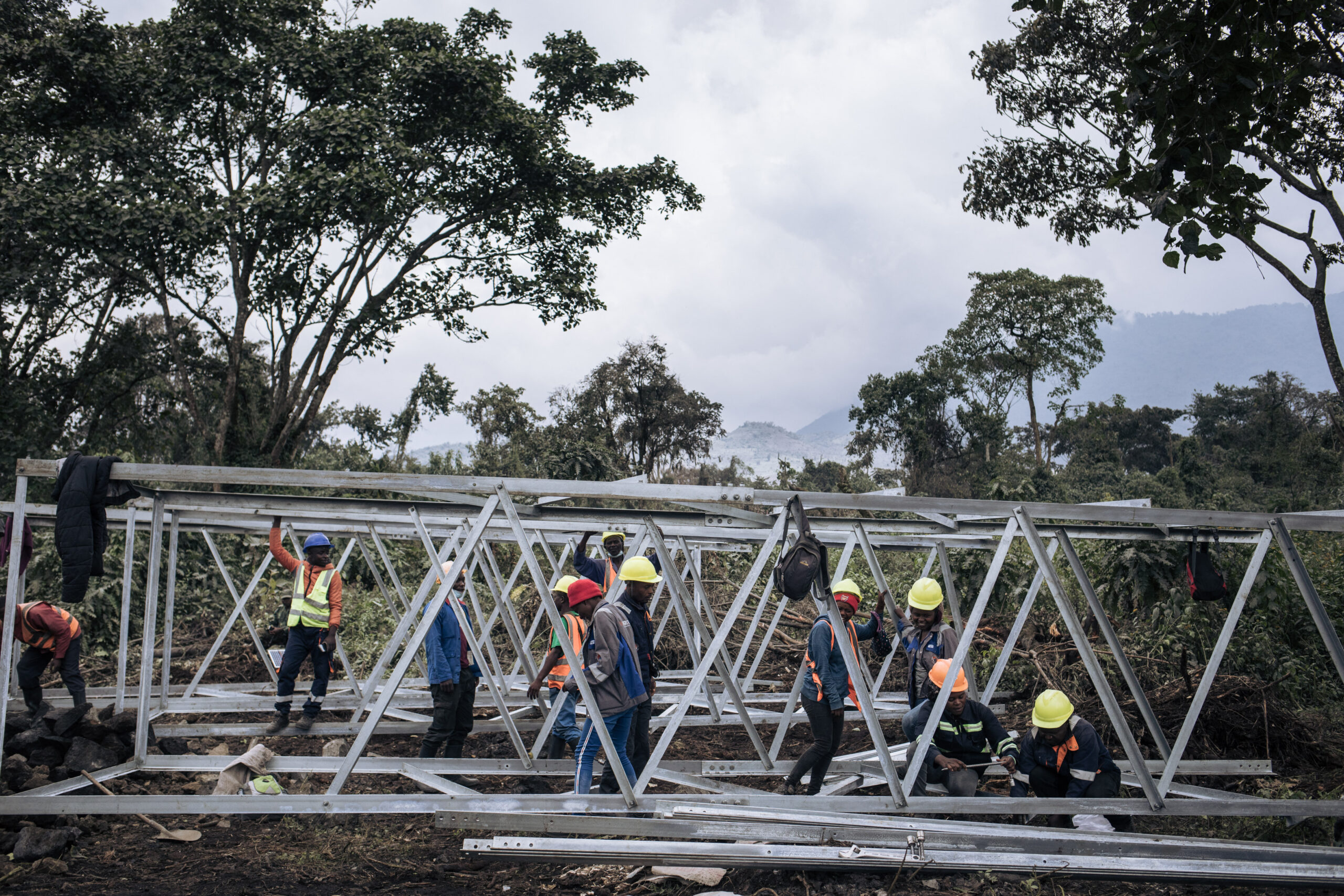
How Infrastructure Investment Could Unlock Central Africa’s Economic Potential
The Democratic Republic of Congo (DRC), one of Africa’s most resource-rich nations, is embarking on a new wave of infrastructure development aimed at addressing decades of underinvestment and unlocking its enormous economic potential.
Despite possessing vast reserves of critical minerals, fertile agricultural land, and a population exceeding 100 million people, the DRC continues to face significant infrastructure deficits that have limited economic growth and regional trade.
Today, new investments in roads, railways, energy systems, ports, and digital connectivity are beginning to reshape the country’s economic landscape and position it as a strategic growth market in Africa’s next development chapter.
The Infrastructure Challenge
The DRC spans an area larger than Western Europe, yet much of its transportation and logistics infrastructure remains inadequate for supporting large-scale industrial and commercial activity.
Many mining regions face connectivity challenges, businesses encounter high logistics costs, and communities often struggle with limited access to electricity and modern transportation networks.
These infrastructure gaps have historically constrained investment, reduced productivity, and limited the country’s ability to fully capitalize on its natural resources.
However, a growing number of public and private sector projects are seeking to change that narrative.
Why Infrastructure Matters for the DRC
Infrastructure serves as the foundation for economic development.
Improved transport networks can connect mining operations to export markets, reduce business costs, and stimulate regional trade. Expanded energy infrastructure can support manufacturing, industrialization, and digital transformation.
For a country that supplies many of the minerals essential to electric vehicles, renewable energy technologies, and global technology manufacturing, stronger infrastructure could significantly increase the value derived from its resource wealth.
A Strategic Opportunity for Africa
The DRC’s infrastructure push is not just a national story it is an African growth story.
Located at the heart of the continent, the DRC shares borders with nine African countries, making it a critical link for regional trade and economic integration.
As the African Continental Free Trade Area (AFCFTA) continues to gain momentum, improved infrastructure in the DRC could facilitate the movement of goods, services, and investment across Central, Eastern, and Southern Africa.
Enhanced transport corridors would strengthen supply chains, reduce trade barriers, and create new opportunities for businesses operating across multiple African markets.
Energy and Industrial Development
One of the most important areas of investment is energy infrastructure.
The DRC possesses some of the world’s largest hydroelectric potential, including the globally significant Inga hydropower project. Expanding energy generation and transmission networks could help address power shortages, attract industrial investment, and support manufacturing growth.
Reliable electricity remains one of the most critical requirements for industrialization across Africa, and the DRC’s energy resources could play a significant role in regional development.
Mining, Critical Minerals and Global Demand
Global demand for critical minerals continues to surge as countries invest in electric vehicles, renewable energy systems, and advanced technologies.
The DRC is a leading producer of cobalt and holds significant reserves of copper and other strategic minerals.
Improved infrastructure could enable more value-added processing within Africa, reducing dependence on raw commodity exports and creating higher-value industries across the continent.
This aligns with broader African ambitions to move up the value chain and capture greater benefits from the global energy transition.
Challenges Remain
Despite growing momentum, several obstacles remain.
Financing large scale infrastructure projects requires significant capital, while governance, regulatory certainty, and project execution remain important considerations for investors.
Security concerns in certain regions also continue to pose challenges to long-term development efforts.
Nevertheless, increasing investor interest and regional cooperation are creating optimism about the country’s future.
Boardroom Voices Africa Insight
The DRC’s infrastructure transformation could become one of Africa’s most important economic stories over the next decade.
With abundant natural resources, a strategic geographic position, and growing investor interest, the country has the potential to become a major driver of regional growth and industrial development.
For Africa, the lesson is clear: infrastructure remains the foundation upon which economic competitiveness, trade expansion, and sustainable growth are built.
As new projects take shape across the DRC, the benefits could extend far beyond its borders helping strengthen Africa’s vision of a more connected, integrated, and prosperous continent.