Angola’s spending on fuel subsidies could reach 3.8 trillion kwanzas ($4.16 billion) in 2026, nearly double the government’s initial forecast, as rising global oil prices increase the cost of keeping domestic fuel prices affordable.
A senior finance official told Reuters that the projected expenditure highlights the growing pressure on public finances in the oil-producing country, where the government is balancing economic reforms against the cost of living and the risk of social unrest.
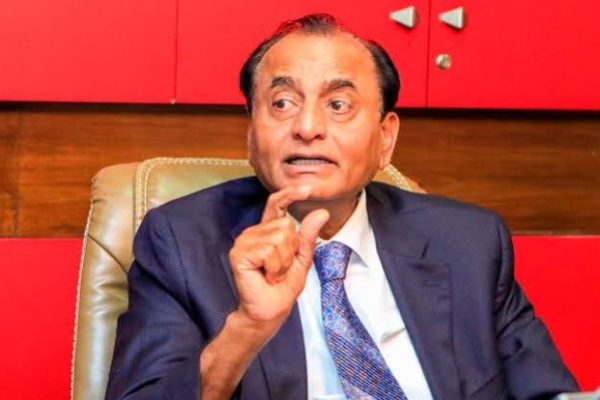
Ottoniel dos Santos, Angola’s Secretary of State for Finance and the Treasury, said the government was considering how to accelerate the gradual removal of fuel subsidies, a process that began in 2023. However, authorities remain cautious about moving too quickly because of the potential impact on vulnerable households.
Speaking on the sidelines of the annual meetings of the International Monetary Fund and World Bank in Bangkok, dos Santos stressed that subsidy reform must go hand in hand with economic diversification.
“We need to move not only with the subsidies removal, but also with the diversification of our economy,” he told Reuters.
He added that the pace of reform would depend partly on whether the economic consequences for vulnerable groups proved less severe than initially anticipated.
Angola now expects oil prices to average approximately $90 per barrel by the end of 2026, well above the $61 per barrel benchmark used in its national budget.
Although higher oil prices can increase government revenue from crude exports, they also raise the cost of subsidising domestic fuel consumption, creating competing demands on public finances.
The government is preparing its 2027 budget, which is due to be submitted at the end of October. According to dos Santos, Angola’s oil price assumption for next year is expected to remain broadly aligned with the IMF’s forecast of $71.50 per barrel.
The country expects crude oil production to average 1.045 million barrels per day in 2027, unchanged from its projected output for 2026.
Beyond the subsidy challenge, Angola is seeking to broaden its financing options and attract more international investors into its domestic debt market.
Dos Santos said the country’s $4 billion Eurobond issuance, alongside other liability-management operations, had covered most of its financing requirements for 2026. Any additional borrowing or external financing would depend on the funding needs outlined in the 2027 budget.
The government is also working to attract foreign investors to its domestic government bond market, seeking to improve awareness of investment opportunities and address concerns about access to the market and the repatriation of funds.
Dos Santos said Angola was open to investors from all regions and wanted to encourage greater international participation in its capital markets.
The government’s challenge is to manage rising subsidy costs while maintaining fiscal stability, protecting vulnerable households and reducing the economy’s dependence on oil revenues. The pace of subsidy reform and the success of efforts to attract investment will be important factors in shaping Angola’s economic outlook in 2027.