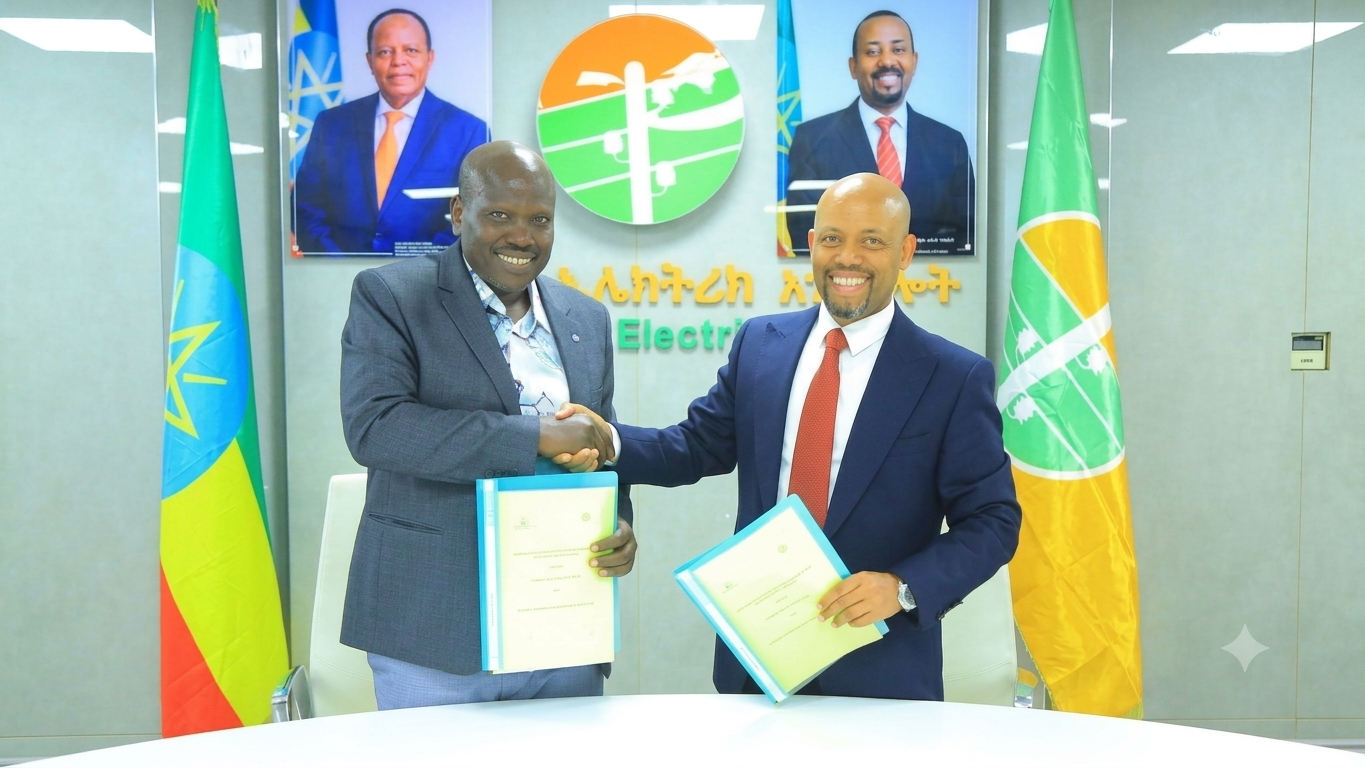
A powerful economic alliance is taking shape in East Africa as the Ethiopian Electric Utility and the Kenya Power and Lighting Company ratify a definitive power supply agreement that redefines the regional macroeconomic landscape. Under this newly minted framework, Kenya will import electricity from Ethiopia at a tariff of 15.5 U.S. cents per kilowatt hour alongside a monthly demand charge of approximately 6.52 dollars. While the financial structure optimizes bilateral electricity monetization, the true strategic value of this partnership extends far deeper than a standard cross border commodity exchange, acting as a direct economic lifeline to historically isolated communities.
By positioning this agreement as an anchor for the economic stabilization of corridor populations, both governments are strategically transforming volatile frontier regions into vibrant corridors of trade and diplomacy. Integrating border commerce centers like Moyale directly into a resilient, modern grid infrastructure injects vital predictability into local markets, establishing the foundational certainty required for formalized, small scale manufacturing and enterprise growth. For these historically underserved areas, a continuous power supply eliminates the operational risks of informal trading systems, offering the energy security needed to scale local industries into competitive cross border entities.
On a macro level, this cross border network vastly accelerates the strategic timeline for a fully unified East African energy ecosystem. As Ethiopia cements its position as the continent’s premier clean energy exporter leveraging multi billion dollar sovereign investments in renewable giants like the Grand Ethiopian Renaissance Dam this transmission corridor creates a vital energy backbone for the entire continent. The infrastructure does more than solve immediate supply shortfalls in Kenya, where a booming industrial sector and rapid electric mobility transition are driving unprecedented power demands. It effectively positions the Eastern Africa Power Pool to merge with broader continental grids, proving that cross border resource optimization is the single most effective vehicle for reducing the structural cost of doing business across Africa.
Beyond the balance sheets and grid metrics, this energy pact serves as a masterclass in regional geopolitics. The Horn of Africa has long navigated complex geopolitical shifts, with cross border relations historically vulnerable to changing security agendas and diplomatic friction. By locking their national utilities into a multi year, interdependent economic contract, Nairobi and Addis Ababa are effectively using hard infrastructure as a diplomatic shock absorber. This deep institutional alignment proves that shared economic interests can override political hesitation, creating a self sustaining ecosystem of peace and showing that regional solidarity is best built on a foundation of mutual infrastructure dependence.
Boardroom Voices Africa Insight
For institutional investors and executive decision makers tracking African growth markets, the true significance of the Ethiopia-Kenya power accord lies far beyond the utility data. It signals a fundamental evolution in how African states are de-risking regional trade. Rather than waiting for flawless political harmony, progressive nations are deploying high value, cross border infrastructure assets to lock in sovereign stability and fiscal predictability. For the private sector, this maturing energy matrix provides a secure roadmap for regional expansion, demonstrating that as regional power pools unify, they will insulate investments from political volatility and make long term capital deployment in East Africa highly predictable.