From Kaolack to Princeton, the African Scientist Redefining Global AI Leadership
As the global race for artificial intelligence dominance intensifies, one African researcher is quietly emerging as one of the most influential voices in the field.
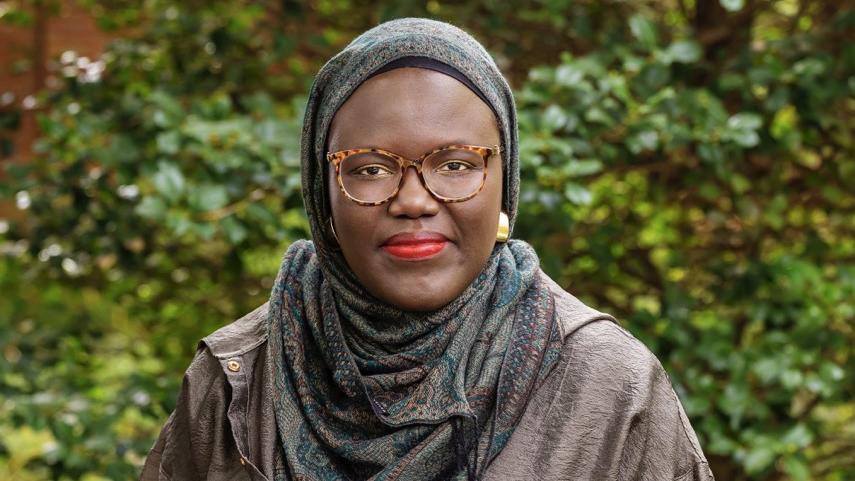
Adji Bousso Dieng, a Senegalese computer scientist, statistician, and AI researcher, is helping redefine the future of artificial intelligence through groundbreaking research, academic leadership, and a commitment to ensuring Africa has a seat at the table in the world’s most transformative technological revolution.
Born in Kaolack, Senegal, Dieng has built an extraordinary career that has taken her from West Africa to some of the world’s most prestigious institutions, including Columbia University, Google Brain, and Princeton University. Along the way, she has become one of the most respected African voices in artificial intelligence and machine learning.
In 2021, Dieng made history when she joined Princeton University’s Department of Computer Science as a tenure-track professor, becoming the first Black faculty member in the department’s history and the first Black woman faculty member in Princeton Engineering.
While these milestones represent significant progress, Dieng has consistently emphasized that true success will come when such achievements become normal rather than historic exceptions.
Her rise reflects a broader shift taking place across Africa, where a new generation of scientists, engineers, entrepreneurs, and innovators are increasingly contributing to some of the world’s most important technological breakthroughs.
Unlike many AI researchers focused solely on commercial applications, Dieng’s work sits at the intersection of artificial intelligence, science, healthcare, and discovery.
Her research focuses on developing AI systems capable of understanding complex patterns in data, making scientific discoveries, and solving problems that traditional computing methods struggle to address. Her work combines deep learning with statistical modeling to create more reliable and intelligent AI systems.
Recently, she received the prestigious U.S. National Science Foundation CAREER Award, one of the highest honors available to early-career researchers. The award includes $500,000 in funding to support her efforts to develop new AI methods capable of accelerating discoveries in areas such as advanced materials, medicine, and clean energy technologies.
The significance of this work extends far beyond academia. As governments and corporations invest billions into artificial intelligence, researchers like Dieng are helping determine how these technologies will shape industries ranging from healthcare and manufacturing to climate science and renewable energy.
Perhaps what makes Dieng particularly important for Africa is her commitment to ensuring the continent is not left behind in the AI era.
She founded “The Africa I Know” (TAIK), an initiative dedicated to showcasing successful Africans in science, technology, engineering, and mathematics. The platform seeks to inspire young Africans by highlighting role models who are making global contributions while maintaining strong connections to the continent.
Dieng has repeatedly warned about the risks of Africa becoming dependent on foreign-controlled digital infrastructure and imported AI technologies. She argues that technological sovereignty will become increasingly important as artificial intelligence shapes economies, governments, education systems, and industries around the world.
Her message is clear: Africa must not only consume AI technologies it must help build them.
Global spending on artificial intelligence is expected to reach hundreds of billions of dollars annually over the coming years. Countries are racing to build AI infrastructure, develop talent, and establish regulatory frameworks capable of supporting innovation.
Yet Africa remains significantly underrepresented in AI research, infrastructure development, and investment despite possessing one of the world’s youngest and fastest growing populations.
Dieng believes that investment in science, engineering, and technology education will be essential if Africa is to compete effectively in the digital economy. She has consistently advocated for stronger collaboration among African nations, universities, researchers, and policymakers to develop homegrown solutions that address local challenges.
Dieng’s influence continues to grow internationally.
In 2026, she was selected as one of only 40 global experts appointed to a newly established United Nations scientific advisory group on artificial intelligence. The appointment places a Senegalese scientist among the leading voices helping shape discussions about the governance, ethics, and future direction of AI worldwide.
Her inclusion reflects increasing recognition that the future of AI cannot be determined solely by Silicon Valley, Europe, or China. Diverse perspectives including those from Africa will be critical in ensuring that emerging technologies benefit all of humanity.
Adji Bousso Dieng represents more than individual success.
She represents a new generation of African leaders influencing global industries from positions of expertise rather than participation alone. In an era where artificial intelligence is becoming one of the most powerful economic forces in the world, Africa’s ability to produce and support talent like Dieng may ultimately determine its place in the future global economy.
As AI reshapes business, healthcare, education, finance, and governance, the continent’s greatest competitive advantage may not be its natural resources it may be its people.
And Adji Bousso Dieng is proving that African talent can help lead the world into the next technological age.