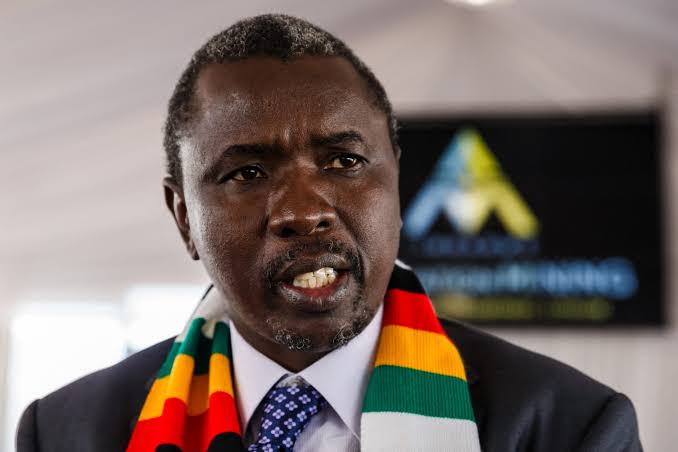
Zimbabwean President Emmerson Mnangagwa has appointed billionaire businessman Kudakwashe Tagwirei as Minister of Economic Development and Investment Promotion, bringing one of the country’s most influential business figures into the cabinet as the government seeks to attract investment and revive economic growth.
The appointment, announced on Thursday by Chief Secretary to the President and Cabinet Martin Rushwaya, takes immediate effect.
In a separate move, Mthuli Ncube will retain the finance portfolio after being reassigned as Minister of Finance. Ncube previously oversaw a combined ministry covering finance, economic development and investment promotion, responsibilities that have now been divided between the two officials.
Mnangagwa also appointed Egepha Victoria Jokomo as permanent secretary for skills audit and development, effective November 1.
Tagwirei is the founder of Sakunda Holdings, a conglomerate with interests spanning energy, mining, agriculture and logistics. The company has played a significant role in government-linked programmes, including fuel supply and the Presidential Inputs Programme supporting farmers.
In 2013, Sakunda entered a joint venture with Swiss commodities trader Trafigura, holding a 51% stake in the partnership.
Tagwirei’s transition into frontline politics has accelerated in recent years. He was co-opted into the ruling ZANU-PF party’s Central Committee in October 2025 and appointed to the Senate in August, following a constitutional amendment that expanded the chamber to include members selected for their professional expertise.
Following his Senate appointment, Tagwirei said he intended to apply his business experience to economic development in line with the government’s Vision 2030 agenda, which aims to transform Zimbabwe into an upper-middle-income economy by the end of the decade.
Earlier this week, he pledged $1 million and 10 vehicles for each province at a ruling-party gathering supporting Mnangagwa’s development agenda.
Tagwirei’s growing political influence has generated divisions within the ruling party and fuelled speculation about his potential role in Zimbabwe’s political succession.
His rise has prompted speculation that he could emerge as a possible successor to Mnangagwa, whose current presidential term is scheduled to end in 2028. Tagwirei has denied ambitions to become president and has maintained that Mnangagwa should remain in office until 2030.
Vice President Constantino Chiwenga has criticised what he describes as attempts by wealthy business figures to capture party and state structures. The United States has also imposed sanctions on Tagwirei over allegations of corruption, which he has denied.
Tagwirei’s appointment places a businessman with extensive interests in strategic sectors at the centre of Zimbabwe’s efforts to attract investment and stimulate economic activity.
The government continues to face significant challenges, including debt pressures, currency instability and the need to restore investor confidence.
His performance will be closely watched as Zimbabwe seeks to mobilise foreign capital, expand productive industries and advance its Vision 2030 ambitions.
The appointment also raises questions about how the government will balance its investment objectives with concerns over political influence, transparency and the relationship between private business interests and public policymaking.