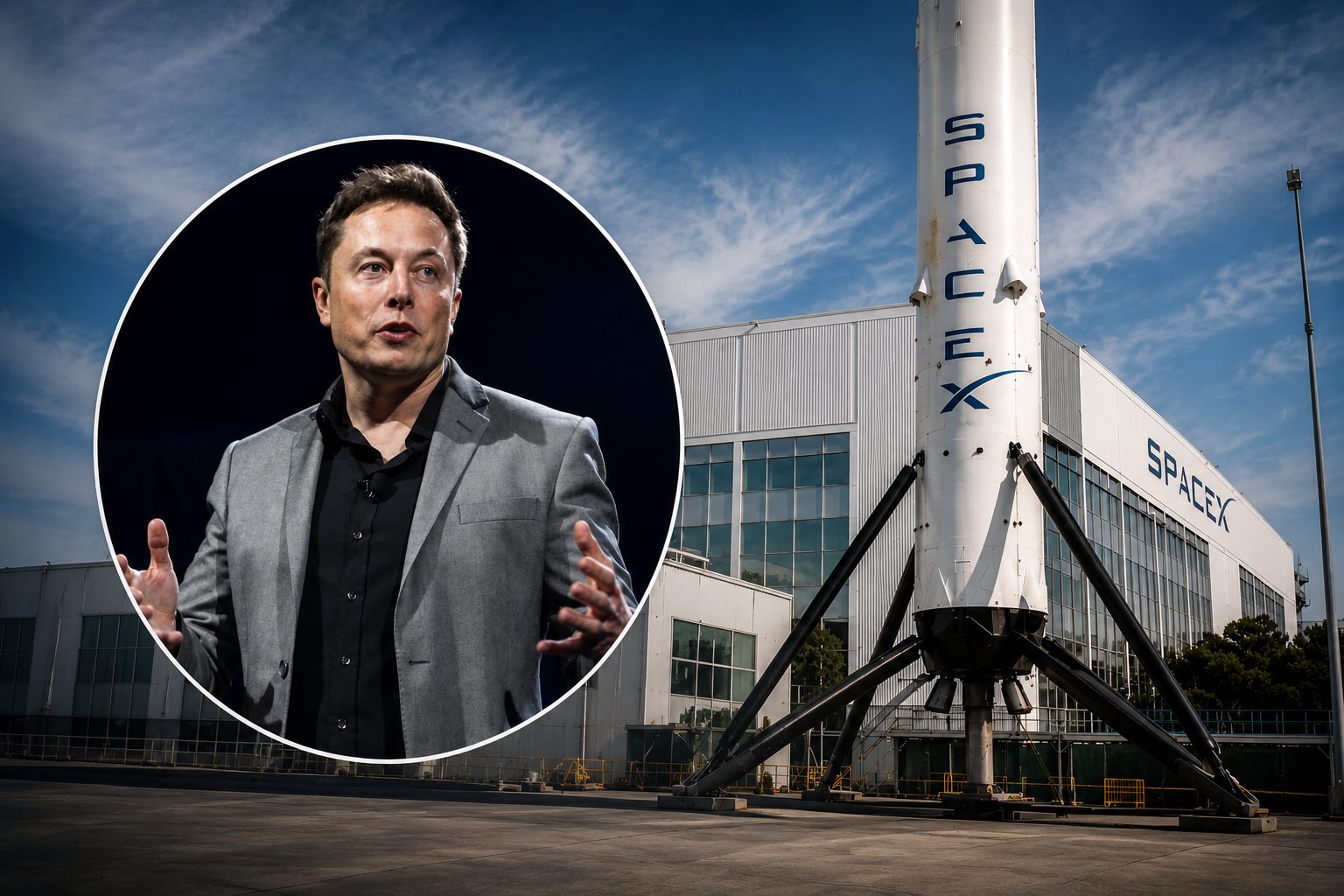
SpaceX shares dropped 10% after a massive artificial intelligence spending surge rattled institutional investors, overshadowing the company’s first quarterly financial report since going public.
Total revenue for the quarter surged 92% to reach $7.81 billion, easily beating average Wall Street estimates. The net loss also narrowed to $541 million, performing much better than the steeper losses anticipated by market forecasters. However, these strong top-line metrics were eclipsed by a heavy cash burn driven by an aggressive expansion into artificial intelligence infrastructure.
Capital expenditures climbed to an astonishing $18.4 billion during the quarter, with nearly $15.8 billion funneled directly into computing power and cloud services support. Chief Executive Elon Musk defended the expenditure during the earnings call, telling shareholders that heavy upfront outlays are vital to capturing long-term market dominance. Management outlined projections pointing toward a possible milestone of $1 trillion in revenue by the end of the decade.
Despite these ambitious long-term targets, institutional shareholders reacted with caution. The sharp pullback reflects growing anxiety across global markets regarding the heavy financial toll of artificial intelligence development, as investors demand clearer evidence that massive capital investments will translate into near-term free cash flow.
Boardroom Voices Africa Insight
The recent market reaction to SpaceX highlights a critical governance lesson for corporate leaders across emerging and global markets. Rapid technological pivots and massive capital deployments require transparent communication to maintain institutional trust. When organizations pursue aggressive diversification into capital-intensive sectors like artificial intelligence, boards must ensure that short-term cash burn does not outpace clear pathways to profitability, because modern equity markets ultimately reward disciplined execution just as much as visionary disruption.