
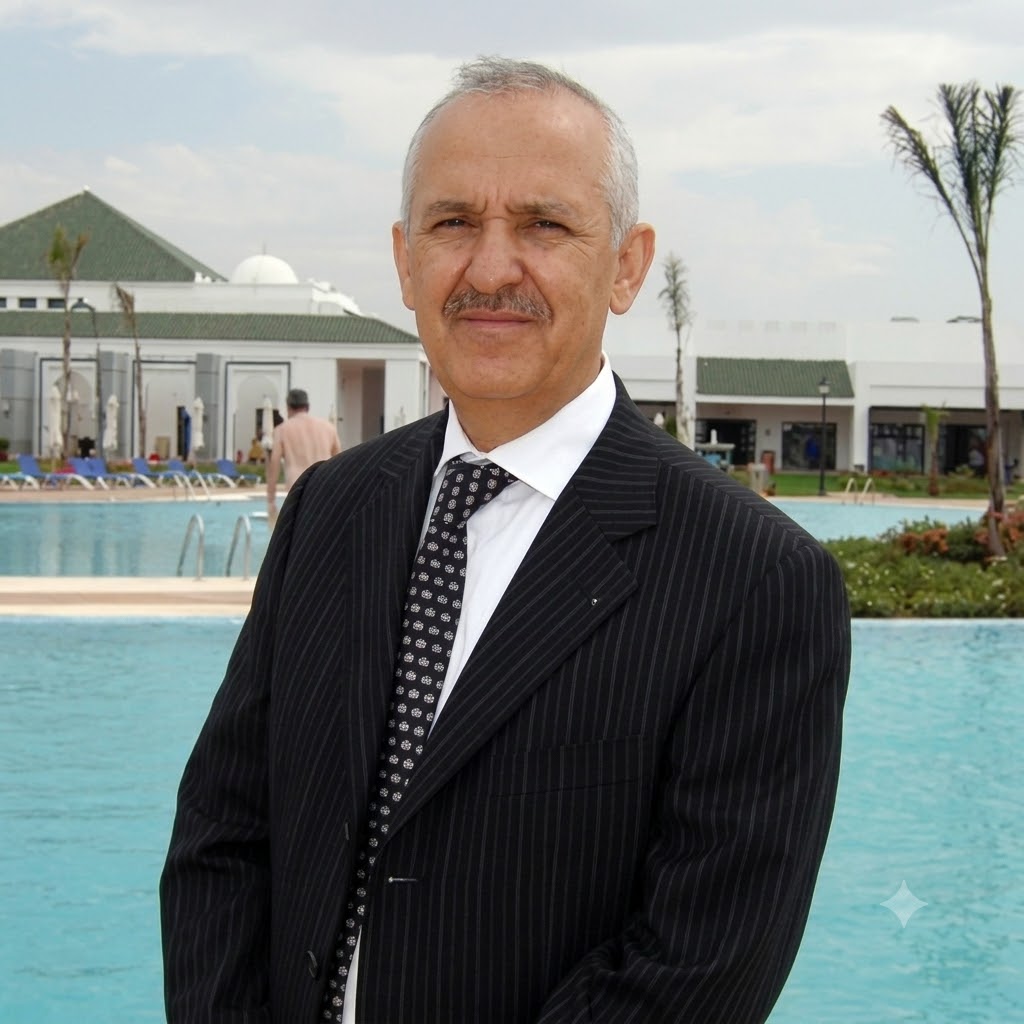
The story of modern African entrepreneurship is often told through tech startups and resource extraction, yet some of the most enduring fortunes on the continent have been built on a far older foundation: the simple human need for shelter. In Morocco, one man transformed this fundamental necessity into a multi-billion-dollar empire that spans nations. Anas Sefrioui, the mastermind behind Groupe Addoha and one of Africa’s most prominent real estate magnates, did not ascend to the heights of the business world through inherited luxury or academic accolades. Instead, his journey is a masterclass in market observation, vertical integration, and the sheer power of scaling solutions for the everyday citizen.
Born in the historic city of Fez in 1957, Sefrioui grew up in an environment where trade and entrepreneurship were woven into the cultural fabric. His formal education ended early when he made the decision to drop out of secondary school. Rather than a setback, this departure marked the beginning of a practical business apprenticeship under his father, Haj Abdeslam Sefrioui. Together, they worked on a project centered around ghassoul, a traditional Moroccan clay used for centuries as a natural cosmetic and soap. Harvesting, processing, and distributing this natural material taught the young Sefrioui the realities of supply chain management, customer relations, and the vital importance of raw materials. It was during these long hours of working with the earth that he learned how to spot value where others saw common dirt.
The capital and commercial wisdom accumulated from the clay trade allowed Sefrioui to venture into uncharted territory. In 1988, he established Douja Promotion Groupe Addoha, turning his entrepreneurial focus toward real estate development. At the time, Morocco was experiencing rapid urbanization, which brought a massive influx of rural citizens into major metropolitan hubs. Cities like Casablanca and Rabat were expanding at a pace that existing infrastructure could not sustain, creating a severe housing deficit. While most established developers focused on high-margin luxury projects for the elite, Sefrioui recognized that the true opportunity lay in addressing the massive, underserved middle and lower-income segments of the population.
Sefrioui’s breakthrough arrived in 1995 when the government of the late King Hassan II launched a subsidized housing initiative to tackle the urban housing crisis. Seizing the moment, Sefrioui secured a landmark contract to construct over two thousand geared-to-income homes. By delivering these quality, affordable units on time, Addoha proved that social housing could be highly profitable if managed with strict operational efficiency and volume. A decade later, in 2005, his reputation for reliable execution earned him an even larger state-backed public housing contract. This propelled Addoha into a dominant market position, eventually leading to a successful public listing on the Casablanca Stock Exchange.
As Addoha grew, Sefrioui encountered a challenge that plagues many fast-growing developers in emerging markets: the volatile cost and inconsistent supply of essential building materials. Rather than remaining at the mercy of third-party suppliers, he chose to control his destiny through vertical integration. Sefrioui entered the industrial sector by founding Ciment de l’Atlas in Morocco, building massive cement plants that secured the supply of raw materials for his housing developments.
This strategic move evolved into a secondary empire of its own. Sefrioui realized that the same urbanization and housing shortages he had solved in Morocco were occurring across the entire African continent. Under his industrial holding company, CIMAF, he rapidly expanded his cement network into West and Central Africa. Over the next decade, Sefrioui built grinding and integrated production facilities in Cameroon, Gabon, Ivory Coast, Guinea, Burkina Faso, and Congo. By manufacturing cement locally in francophone African countries that previously relied on expensive European imports, he created a structural cost advantage that fueled local infrastructure booms.
Sefrioui’s business model has always been characterized by agility and a sharp focus on high-growth markets. This was vividly demonstrated when he made the strategic decision to sell his sole cement plant in France. By shedding this European asset, he freed up capital and management energy to focus entirely on the African market, where population growth and urbanization continue to drive unprecedented demand for cement and housing. Today, his operations are truly pan-African, with Addoha producing tens of thousands of homes across the region, supported by financial institutions like the International Finance Corporation. Sefrioui’s daughter, Kenza, now serves as the deputy chairwoman of the company, ensuring that this legacy of building Africa’s future remains a family mission. From a school dropout selling cosmetics clay to an industrialist shaping the modern skyline, Anas Sefrioui’s journey proves that the greatest fortunes are built by creating lasting value for the communities we serve.
Boardroom Voices Africa Insight
Anas Sefrioui’s rise demonstrates that sustainable wealth is created when business strategies align directly with national developmental goals. By viewing low-income populations not as a risk but as a viable, high-volume market, and by securing his supply chain through vertical integration, Sefrioui unlocked a blueprint for scalable, pan-African success.


