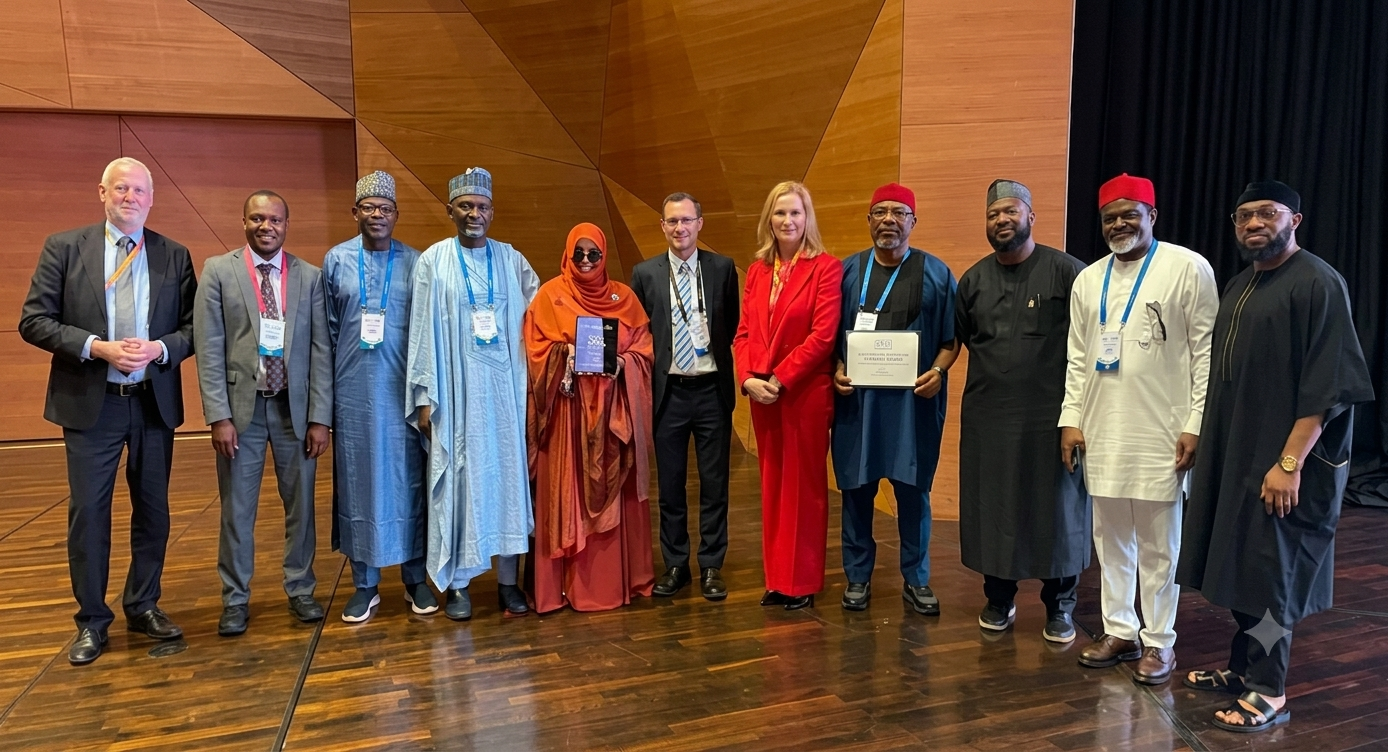
Nigeria has secured a major victory on the international financial stage, signaling a transformative shift in the regulatory landscape of West Africa. At the thirty-second Egmont Group Plenary of Heads of Financial Intelligence Units in Baku, Azerbaijan, Nigeria was honored with the prestigious Stolen Asset Recovery Initiative Award. Conferred jointly by the United Nations Office on Drugs and Crime, the World Bank, and the Egmont Group, this distinction represents one of the highest operational honors within the global financial intelligence community.
The award recognizes an outstanding case that demonstrates innovation, operational effectiveness, and measurable impact in combating financial crimes. The honor celebrates the strong partnership between the Nigerian Financial Intelligence Unit and the Economic and Financial Crimes Commission. Intelligence generated by the intelligence unit provided the foundation for successful investigations and asset recovery led by the crimes commission, showcasing how institutional collaboration can effectively dismantle illicit networks.
This global accolade arrives at a critical juncture for Africa’s largest economy. It comes just months after Nigeria successfully exited the Financial Action Task Force grey list in October twenty twenty five. For corporate leaders and international partners, this series of regulatory milestones marks a significant improvement in the nation’s financial credibility.
Hafsat Abubakar Bakari, the Chief Executive Officer of the Nigerian Financial Intelligence Unit, noted that the recognition is a powerful validation of the capacity of the country to generate actionable financial intelligence and secure meaningful asset recovery. She emphasized that while the award is a celebration of achievement, it also brings a responsibility to continue investing in intelligence-led approaches as financial crimes become more complex and technology-driven.
Why This Matters
-
Elevates Sovereign Trust: It links public-sector anti-corruption victories to lower country risk premiums, changing how international markets price capital for local businesses.
-
Reduces Doing Business Costs: It highlights the direct link between global regulatory praise and the reduction of rigorous compliance bottlenecks that African companies face during cross-border banking transactions.
-
Sets a Governance Benchmark: It establishes a clear precedent that institutional alignment, rather than isolated efforts, is the key to building an attractive environment for foreign direct investment.
The Boardroom Voices Africa Insight
From the perspective of corporate governance and boardroom leadership, this development carries implications that extend far beyond public sector administration. For years, African boardrooms have navigated high risk premiums and intense scrutiny during international transactions due to perceived systemic vulnerabilities. When state institutions demonstrate world-class compliance and secure the validation of global watchdogs like the World Bank and the Egmont Group, the economic landscape changes for everyone.
Enhanced national regulatory credibility eases the due diligence burden placed on local corporations by international banking partners, which naturally streamlines cross-border trade and capital flows. Furthermore, robust anti-money laundering frameworks serve as a primary prerequisite for risk-averse institutional investors looking to deploy long-term capital into the continent. The successful collaboration between an intelligence unit and an enforcement body ultimately serves as a governance template for other African nations striving to strengthen institutional frameworks. Because robust state transparency acts as a powerful enabler for private sector growth, corporate boards must seize this momentum to deepen their internal compliance structures, ensuring they match the world-class benchmark set at the macro level.